All over by Christmas
We are extending our house. We are having an extension built. Our house is being extended…
Hmmm – I'm not sure what the proper verbs are here. It's our plan, we pay the money, we did some of the thinking, we make the tea – but an architect did the drawings and somebody else does the work.
It all started yesterday – just a bit of warm-up demolition of the roof of the existing garage and single storey utility room. But suddenly there's that air of inevitability – we're committed now. A ten week build – comfortably over by christmas – so long as we don't hit any snags and the weather is kind. Gulp!
It's a standard extension for a semi-detached house… extending sideways and going up a floor… to give us a ground floor bathroom, a significant expansion of our long thin kitchen, a small study upstairs and a new bedroom for one of our daughters.
Of course, I've taken a couple of photos, from fixed points and angles, before everything gets going. I'm hoping to do the same roughly every day and, if I get the angles right, I will have some kind of time lapse sequence to show for it.
Pictures on the blog soon…
Ross Kemp has a twin!
I was reading an item on Jeff Jarvis's Buzz Machine blog the other day where he was drawing attention to a couple of YouTube videos attacking the Obama campaign.
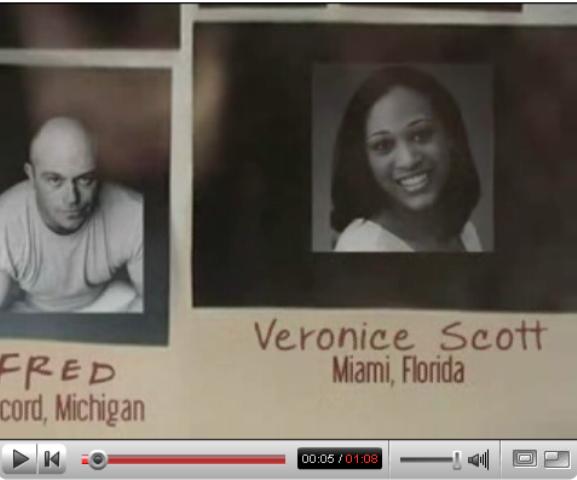
They both use the same template. The first video is about voters in Michigan and Florida effectively losing their franchise in the primaries. It begins with someone sticking up print images of these voters – with their name and location written below.
I couldn't help noticing that 'Fred' from Michigan bore a striking resemblance to actor Ross Kemp. After a bit of pausing and reviewing I did a Google image search on "Ross Kemp" and the very first image result is exactly the same image as that of 'Fred' in the video.
Try going to the YouTube original http://www.youtube.com/watch?v=_XvsrtO6O7g and pausing it at about 5-7 seconds to make the comparison.
So – there's a video on YouTube about hypocrisy… which seems, itself, to be misrepresenting reality…
Oooh! I'm so shocked…
BTW – if anyone has Ross's agent's phone number why not let them know. I assume he's not aware.
Now I'm getting the hang of it – here's the video (about 5-7 seconds in OK?)

… and here's the image

…and finally – I've managed a still from the clip
Suicide Epidemics
The first days of the New Year almost got me blogging again – on themes of blogging, not blogging, the psychology of the perception of time spent not blogging and so-on. But for all the reasons I haven't blogged for six months these impulses never quite made it to the top of the to-do list.
As ever, it has been seeing something on the news, and reacting to it, that finally hit the blog reflex.
There has been a story, triggered by the most recent suicide, about a sequence of clustered teenage suicides in the Bridgend area of South Wales. http://news.bbc.co.uk/1/hi/wales/7204172.stm
Because some of the people knew each other, and some of those communicated using social networks, there has been an 'Internet may be glamourising suicide' reaction from some quarters. Part of my initial reaction is, equally, to leap to the unconditional defence of social networks (e.g. "they're just a channel like phones, text messages, written notes, gossip, urban myth, newspaper coverage etc etc") against those who seem to want to lump them, or even 'the internet', into a single dark mass and find it responsible for all the ills of humanity. Part of that same defence is to say that we should be concentrating on why, if there are connections, circumstances have made young people so vulnerable to being 'infected'.
That epidemiological word immediately made me think of Malcolm Gladwell's 'Tipping Point' which talks about ideas as things that can be transmitted, like diseases, and can have real effects on those who are infected – for good or ill. Gladwell even has a whole chapter on teenage suicide in Micronesia during the 1970s and 1980s, long before the modern internet or social networks, creating a rate ten times that of anywhere else in the world. He observes that the manner and circumstances of those suicides were often strikingly similar – sometimes the individuals knew each other but sometimes a romantic mythology grew up around a case and the ideas then 'jumped' to another unconnected group via word of mouth or written texts. He also observes that there was something about being a teenager and male that made you particularly susceptible to infection… a feature of all but one of the Bridgend cases.
I'm aware that I'm talking in a rather analytical way about something that is very recent and very raw for families in that area and that these are all individuals with individual stories and realities – not some remote set of statistics in an old ledger somewhere. But I appreciate neither the way that some TV reporters seem to be manipulative in extracting and displaying 'real individual human emotion', nor the more cerebral one-dimensional attack on social networks. I think that's my main thought – these are people, let's not concentrate on the 'channel', let's try to understand how they were influenced by many things. Not least because that may help prevent a further spread.
But if we use the language of epidemics and recognise that social networks may have been the 'vector' for the disease in some instances, then my defence of them is no longer absolute. We may have to think of them as a new 'vector' in the way that all those airlines shifting large numbers of people around the world at great speed seem to have changed the model for the spread of more familiar types of infection such as flu viruses. That's a legitimate and proportionate interest.
Indeed everyone is interested right now in how ideas and dispositions propagate through social networks – especially those that lead to actual behaviours such as buying or voting. You can't move for social network analysis, social media mining, and theories of group mind. Social media didn't suddenly make all these things possible – specialists have studied these patterns in other media, not to mention direct personal contact, for many years and most of Gladwell's examples are pre-internet – but social media made the concepts easier to grasp for more people, they lay down easily detected traces of tangible evidence, and they have given the phenomenon itself potentially greater reach and speed. They have also caught the eye of people with serious marketing budgets, just as TV seems to be losing its giant's share of ad revenues.
So let's see more sophisticated reporting of cases like Bridgend – to reflect the sophistication of the work being demanded by the market.
Whilst we're at it, let's start tracking the spread of another meme. That's the one which goes, "Facebook/Bebo/Myspace (delete where applicable) continues to commit further atrocities on behalf of Satan". Social Networks or 'The Internet' seem increasingly to be being set up as the latest in a long line of technologically topical single issue/single solution analyses of what's 'wrong with the world'. Remember when it was television, or film, or the contraceptive pill, or the railways… ?
[BTW – I'm talking primarily about the GMTV school of reporting, as opposed to BBC News Online, even though the 'Internet of Satan' meme seems to afflict even the latter to a degree, albeit mainly via the words of the local MP.]
Word of (wash your) Mouth (out)
I sometimes wonder how much we over-estimate the quality of what's thought and written on the web. [Yes – take it as read that I'm commiting all sorts of precisely the same assumption, and betraying various prejudices, when I use the term "we". Who do I think "we" are then? I won't go there – but be assured that I'm aware.]
But here's what I meant.
Lots of research companies, software companies, various arms of marketing, are now keen to uncover the 'buzz', the word of mouth reputation of a given product, brand or idea. Of course a key part of that enterprise is filtering and discrimination – via a combination of applications to do the heavy lifting and increasingly expert people to do the nuancing and the tough semantics/semiotics.
But my default reflex is to visualise this as the trawling of a set of largely articulate, well meaning and discerning discussion. After a while I congratulate myself on getting down from that elitist high horse and say, 'No – it's also about a kind of relaxed, trivial, half focussed chit-chat, the purpose of which is not consciously to critique anything, but just to socialise, hang out, help friends and family and all that.' In fact – that's the sort of discourse that's really going to help provide insights into consumer/citizen values and semi-conscious influences, and so on.
Even then, what I'm not prepared for is drivel – and foul-mouthed drivel at that – where even the sheer lack of structure or style in the use of obscenity itself is part of what makes it drivel. I've got no problem with stylish, well-formed swearing. It's bad language as punctuation that gets me – but also the level of invective that it seems to be portraying in reaction to really inappropriate things.
Example:
I have a friend who wants to get a new mobile. His sight isn't as good as it was – so he wants bigger buttons. I thought maybe a touch screen phone would help. I remembered that, iPhone aside, there was an LG touch screen phone – Prada branded. I read some online reviews. Then I found a couple of demo clips on YouTube. Then I glanced down at the comments. YouTube comments clearly are part of the "social web's" totality of sentiment. Page after page of invective, foul language, seemingly mindless or just incomplete and unsubstantiated crticism. Innumerable pointless comparison with the iPhone – "the iPhone will own it" "the iPhone will kick its ass" – and then much more that's nowhere as mild and repeatable as that. To what end? Should I be coming away with some grassroots revelation that the language of custom car (macho competitive) comparison has come to phones? Or should I be regarding this as just as disconnected and minority an activity as elite bloggers discussing the effect of the elite blogosphere, and complicated new apps, on the future of citizen journalism?
Setting aside my irritation at myself, for always defaulting to a sort of utopian reflex about what web2.0 can and will do, the point is that we know little or nothing about the people making these utterances – or about their assumptions of audience etc – compared to more specialised forums and communities dealing with, in this case, mobile handsets. They may say very little in their YouTube profile.
So I have two questions.
The first is not 'can we filter in all sorts of ways for utterances which have little or no intrinsic worth and no background?' but 'should we?' If so, on what basis – given that you have to do some filtering just to make material manageable, even enough to form the basis of some hypothetical segmentations? Who is out there making those sorts of decisions and explorations right now? For every one of them I bet there's a hundred who choose (not just out of my wishful kind of lapsing) to generalise about social networking as a positive revolutionary force. It's much easier…
The second, more personal, more heartfelt question, is "how can it be possible that a demo video of a touch screen mobile handset seems to stir up levels of passion, anger and conflict that I would normally associate with much bigger and more visceral issues and prejudices?" Or am I misreading the language from the wrong social milieu? If so – then the very last question is – what language (and 'language' is what we are trawling the web for) is there left over to indicate real extremes of response?
Still losing weight
To resume the pattern on this blog – thoughts about the social web mixed with my weight loss and fitness efforts, and the odd commentary on media and society, all with or without judicious use of VOX's three levels of privacy – here's an update on my weight loss.
I have now lost 21.4lbs. So I'm nearly half-way to my 50lbs and not yet half way through the year.
Complex calculations – called arithmetic – project this to success at the end of November.
Some patterns are emerging. I seem to lose weight one week and stand stil the next, then lose more, stand still and so on. The diet is forgiving of the odd 'episode' – so I'm not having to live austerely so long as I keep up the exercise. But there's always something threatening the gym routine – this time it was a couple of weeks of pain and antibiotics as a result of some heavy duty dental work I needed. The antibiotics made me feel weird and I also had to eat mush some of the time.
I feel fit, healthy, energetic and seem to be suffering from less stiffness and 'end-of-the-day' weariness. Fingers crossed.
I'm going to let work colleagues know about the sponsorship once we get into June – and let a few more people know at the same time.
In step with tomorrow's 'Social Impact of the Web' event at the RSA, David Wilcox has written an article for the RSA website exploring this question. He makes four statements about the necessary positives – but it's the follow up questions in each case that do such a good job of pinpointing where the potential and the frustrations lie. David writes
''It is people, not organisations, that collaborate – so their personalities and preferences are hugely important.
How do we better understand that, online as well as off?Organisations create the cultures which may or may not encourage sharing.
Will blogs and other social media really help change that, when senior managers are often reluctant to use new tools?Conversations and stories work better than bullet points to get people talking.
So why are many meeting rooms still dominated by immovable Board tables, and conferences by Powerpoint?Effective collaboration requires trust, relationships and understanding that take time to develop.
Why are so many online systems still developed on the basis of "build it and they will come and work together" … ending up with empty forums and a lot of money wasted? ''
I'm not going to attempt to answer the back-questions here, though I look forward to tomorrow's discussion. But I do want to introduce a thought about psychology, collaboration, knowledge and understanding which I think touches upon several of them – not least senior management culture and the persistence of Powerpoint 'lectures' at conferences.
It's this – we still don't believe that we can understand something or, therefore, manage it unless we can encompass and contain it. Individuals still strive to almost literally 'get their heads around' the facts or the process or the problem or the solution. They want to see the edges and they want to be able to see all the feedback in order to know that they are having the effect they desire. So there's a paradox in any place that individuals try to use collaboration, and what I would call 'distributed comprehension', to do something and yet want to drag all the outcomes and consequences back in and contain it within their own heads. Part of the voodoo of this is to capture the soul of the outcome in a Powerpoint presentation – and then let others peek at it in order to confirm your mastery.
I'm subject to this as much as anyone – so this isn't about some stupid group of 'others'. If we believe that distributed groups can now bring about better outcomes and have unprecedented emergent effects then maybe we are just going to have to get used to only seeing part of the picture and controlling or influencing part of the action. On the one hand this looks like a new web2.0 phenomenon but on the other hand it's remeniscent of the experiences of a 19th century general in a major battle.
This is how I feel about the social web itself. I look out at the lightspeed expansion of content, connections, combinations, tools and, yes, rubbish out there and I feel two things. I want to get a handle on it, understand it, see those expanding edges and be able to explain and commend it to others. But I'm also in awe of it and have a growing feeling that I would be (or become) insane to try to capture it. I was suddenly put in mind of the Romantics arriving in the Alps and gazing on mountains of a scale they had never seen before. They talked about 'the sublime' - the uncontainable. They didn't just see really big impressive mountains (that could plausibly be represented on a relief map) they saw something that they realised they couldn't encompass, maybe they saw "nature" in general. They were overwhelmed and changed by it and spent their lives trying to find aesthetic forms which would allow them to communicate it, and express its impact on them, but not to contain it.
How does this translate to collaboration and engagement? I think that David's questions point to the fact that we haven't yet learned to let go. This way of doing things will only really take off when members of groups accept that the group, as a whole, may understand, resolve and do things which no individual member can understand, resolve or do. We do that with societies and economies, give or take the odd outbreak of totalitarianism, accepting that no one of us can determine the flow of the whole. But online collaboration has briefly made collective action look like a process, a system, which can have determinate outputs which can be owned, understood and powerpointed by one person.
Perhaps social media will compel us to accept that we all need to see, feel and participate in the world through other people – at least some of the time.
Stuck!
For two weeks running I've been stuck on 17lbs lost. Rationally I understand the factors – I've recovered from those two bugs and, being able to train as well, I've put back some muscle. I also had a few family events and outings, where it's harder to control what I'm eating.
So I know it's not time to panic or go for silly reductions in my calorie intake. But it's surprisingly hard to hold your nerve when you're not making that 1lb+ per week any more and your "eta" starts to slip to later in the year.
Good things: It's gardening weather. We've got the bikes out of the shed.
Tactics: Watch out for the odd food trap. Keep up the gym frequency but keep the weights low. Eliminate the last of my alcohol ration for the next couple of months.
It's a marathon – not a sprint.
Reminds me – good luck to Amanda Wheeler who's running her first (and, she hopes her last) marathon in the London on Sunday.
Witness
I was mentally rehearsing, this evening, the arguments I would use in response to a colleague. (I was mowing the lawn in the dark at the same time – like you do). I was reflecting on the fact that I had responded – positively mind - on an emotional and subjective level to a thesis. My colleague subsequently pointed out a number of analytical weaknesses in the thesis and I realised that I hadn't even seen these because I had reacted on another level. My problem now was to identify how and whether I would change my mind about this thesis.
An example that came to mind was my response to a scene in the film 'Witness', set mainly in an Amish community. The Harrison Ford tough cop character, John Book, is posing as an Amish in order to hide out from forces unknown who are out to eliminate a witness to a murder. He has to travel into town on an errand, dressed in Amish clothes, and he and a companion get picked on by the local bullies. Taking advantage of his assumed Amish non-violence they push him around, knock his hat off and, eventually, when they go "boo" in his face, he snaps and punches the big guy out. There's such an exultation, such a catharsis, and such satisfaction in the bully's shocked reaction that this remains one of my favourite movie moments. But was it the right thing to do, the smart thing? No – his anger was mainly about the humiliation of his companions, but in his retribution he risks exposure, he risks alienating his hosts, corrupting his companion's faith in his Amish lifestyle – he gains nothing. Do I realise this analytically? Yes. I've realised this fact for 20 years. Has this changed my reaction? No.
But once I got on to thinking about 'Witness' I thought about another of my all time favourite scenes – from the same film. At the end [alert – plot spoiler!] John Book has discovered that his main enemy is a corrupt cop, a former buddy. There's a big fight which ends with this guy holding a shotgun on him – he's got the gun, he's got the status to allow him to fake the evidence (once Book is dead) – but the Amish are converging on the scene… quietly, calmly. It's not that they would rush this guy and kill him. But they can see him – they can bear witness (there's obviously a theme of 'bearing witness' in different senses throughout the film) and, as Book asks him, are you going to kill all of them too?
This tableau of transparency, non-violent witness, of evil confronted with more simple resistance than it has the energy to keep striking down, remains as a profound image in my mind. It's almost a principle I aspire to. Even though it contradicts my response to that earlier scene.
I think that's the ultimate that I see in the potential of the social web. The ability of the many to bear witness, to be seen and heard, in ways that seemingly more powerful individuals or institutions cannot constrain or contain. If I'm right, and not just being melodramatic, then the most important questions we should be asking are those about the control of access to the internet, as writers, as readers or, increasingly, as both. That's overt and covert control, political or commercial control and it's more important than any technical or semiotic debate about platform and content.
As ever, it's the things you take most for granted that are the most difficult to rally defences for…
Sogs or Blermons?
When I start to think in the format of a blog entry I can nearly always feel a preamble coming on; a little story to put it in context, a little theme to join back up at the end. It all starts to sound a little bit like a sermon – but then maybe that's why sermons are the way they are – because of the way they are generated week on week. On the other hand – that's how Alistair Cooke always used to set his pieces… and you could do worse.
Reset….
The Death of Words – Part 2
When I wrote the first part of this – after I'd been surprised to find the word 'scenario' was still useful – I little thought that it would apply to what's been one of the key words for me over the last 18 months – "Web2.0". Actually I'm not sure it is a word – it's more of a Slogo or a Logan. But it does turn out to be a good example.
Starting at the end – I think I'm going to have to start a 'Campaign for Real Web2.0'. Just as the Campaign for Real Ale arose from a frustration with keg beers, CO2, mass production and 'chemical' additives. So CaMRW (trips of the tongue) arises from a frustration with the hollowing out of the original meaning of Web2.0 – resulting in there being no guarrantee that when someone uses this term they will be applying the full depth, subtlety and richness of flavour. Right now 'Web2.0' is heading for the Dead Words pile. Many people think its already there. I think it's too soon to give up, and important not to.
I think that 'Web2.0' as originally coined marks a real watershed in the history of the web and of it's impact on people – in a sort of BC/AD way. I don't think Tim O'Reilly was making a dumb generalisation, nor do I think he was cynically appropriating a brand from which to make conferencing and publishing revenue. I also think that any connection between the "2.0" and the advent of a second wave of internet investment and high returns or valuations is at most secondary and contingent.
My genuine worry is that anyone who now utters "Web2.0" runs the risk of looking like they are way behind the game, of sounding old-fashioned or superficial or un-informed. There are some really important things about the original concept of Web2.0 that could be lost or diluted if this deters serious thinkers from using the term before we have some established substitutes. There's also a unity to the the original concept which could be lost if the substitution is for several disparate and specialised terms – such as 'social networking'.
I'm going to try to capture what I think those important and connected 'things' are and thereby suggest a manifesto for the Campaign for Real Web2.0


 Nick Buckley : Practically Mindful
