Creative Hypochondria – a reply to “Exploring Art in the City”
Sometimes you read something which unlocks a reaction, makes you think, and then makes you want to write something in response, or rather in addition or in harmony.
Last week, for me, that was Kate Withstandley’s post about writer’s block, here on ‘Exploring Art in the City’ An irony for both of us is that this was a piece about being unable to write!
My response to Kate’s post proved over-long as a comment. So I reproduce it here as a linked post:
Any response runs the risk, big time, of sounding patronising. “Hey, no, you’re doing the right thing… stick with it!” or “Why don’t you try this, or that?”.
I suppose the antidote to that is for me to say that I’m replying from a point of recognition. Not exactly the same things – but enough of a pattern to say, “Yes – I know” plus “I’m trying this at the moment”. Also important for it to be the ‘real’ me that’s saying it, and not the me that I want anyone who reads it to think I am.
I think that writing from wherever you are right now – is exactly the right thing to do – even if it feels like a paradox. It might be a song, or it might just be you singing ‘la la la la la la la’ to warm up your voice again. I see a lot of bloggers, for example, writing at intervals about not writing.
It also fits with an example I really like in Robert Pirsig’s, ‘Zen and the Art of Motorcycle Maintenance’. The central character is teaching creative writing. One member of the class is totally stuck. He suggests that they think of a building in the town that they like and to write about this. Still nothing. OK – just the physical facade of the building. Still nothing. Choose a brick, one brick, describe it… result, deluge of words, ideas, aspects…
So to find yourself sometimes back at the ‘brick’ of writing about not writing, is probably going to go with the territory.
I really identify with what you say about fitting into cuboids – and about the apparent ‘sub optimal’ nature of having lots of partial ‘ologies’. The ‘About Me’ in my own blog is, in essence, a study in reflecting on ‘all trades-ness’. For what it’s worth, I think that the internet is [still only just] starting to usher in a new set of rules. The effect of hyperlinks [to go back to the old language of when this was first mooted] is to create horizontal and networked connections between both ‘stuff’ and people. This is in contrast to where only hierarchical organisations, with serious resources, used to be able to hunt down that material, draw it up into the apex or the pyramid, process it with ‘specialists’ and then wield it to their advantage – albeit in deadpan language. That paradigm still prevails for now, and even seems to think it can appropriate the new networks. [In The Cluetrain Manifesto back in 1999, David Weinberger wrote – “hyperlinks subvert hierarchy”]
I think that what’s just starting to happen is the emergence, on top of networked stuff and people, of networked agreeing and networked doing… which will need less and less infrastructure devoted to control. So it will need to classify people less – or just get to do so less often..
In practice, whilst we will always need experts to progress and deepen specific domains of knowledge and practice, these new networks are going to be desperate for people who can synthesise, contextualise and create(-ise?) by being able to navigate and curate across an ‘all-trades’ world. That includes being able to write about the connections and collisions, in ways that create multiple ways of seeing. No amount of stylistic grace, alone, is going to compare to the ability to ride the web this way. [I wonder if we’ve forgotten why it was called ‘surfing’].
In the face of so much – online and offline – that will offer to sweep us away as writers, we are going to need something to hang onto. I think ‘Authenticity’, having a ‘me’ that you know and believe in, will be vital. That’s why it’s far more important to write as you, than it is to measure up against some judges’ handbook. Authenticity isn’t easy. It’s probably a life’s work to know yourself – let alone transpose that into written output. But it’s as worthwhile a work as I can imagine. Again I think it helps to start from where you are right now. Maybe one brick for you to look at is ‘Purpose’. What is your writing for? It’s not impossible that you would know straight way – but I’d be surprised. it’s probably something to dwell on, leave running at the back of your mind, until the answer hits you when you’re not looking. Once you’ve got that, and can tap into it, everything else will follow. Even now, you actually radiate certainty about wanting to write. If you remember why – then the how, and the whether, will evaporate. [It’s probably the Authenticity – the openness and frankness – in your post that made me bother to respond for example.]
The new rules are coming. It’s not my phrase – it comes from a blog post I read by someone who felt that they had never really been able to function well under the ‘old rules’. They felt there was something more natural to them about this, difficult to pin down, decentralisation… along with a re-admission of the aesthetic and emotional to leaven all the rationality and systems we have been subject to for several generations. If that sounds a bit utopian, the other thing that struck her, and now strikes me, is that there seem to be a lot of people thinking similar things. So she felt less like a minority, and maybe even like someone who had just been a bit ahead of her time.
Is this really happening? My, all purpose, motto comes into play here – another trait of the networked jack of all trades – is that rather than say ‘do this’ or ‘follow me’ I’d say “Let’s find out together”.
Next #dartfordtweetup – 17th December 7:30 Royal Oak

UPDATE 13th December: Reminders sent via twitter to the 45 contacts who are now on the list for this.
ORIGINAL POST: This is just a short post to confirm the date – Tuesday 17th December at 7:30pm
I’ve checked with the Royal Oak that they don’t have anything on that evening. Just a precaution as we’ve been a bigger group each time.
As mentioned in the report on the last tweetup, this is a temporary move to a Tuesday, due to there being a council meeting which is compulsory for all councillors… which would deprive us of several ‘regulars’.
I’ll be sending out reminders via twitter as we get nearer the time. I may update this post as and when I get a sense of who’s coming. As usual – please spread the word.
For anyone new to this – thinking of coming for the first time – it’s an informal social gathering for twitter users in the Dartford area. [Plus the ambassador from Woolwich ;0) ] No agenda, no special purpose. See my last report for topics covered.
Any ideas, questions, responses then, as usual, just leave a Comment below or tweet me @grimbold.
Look forward to seeing you all there.
Free beginners’ course in Mindfulness – Dartford area
To upgrade my certification as a Mindfulness trainer I’m offering a free 4-week course in Dartford in January.
This is a gentle and very practical introduction to techniques you can use to improve concentration, reduce stress and fatigue, manage your mood, and become more creative. Mindfulness has been adopted as a therapeutic technique for depression, anxiety and chronic pain. But it is also being introduced into schools – to improve behaviour and performance – as well as being offered to employees via businesses’ well-being programmes.
You are probably wondering what Mindfulness actually is. In which case you should come along. But a dictionary definition is:
“… a mental state achieved by focusing one’s awareness on the present moment, while calmly acknowledging and accepting one’s feelings, thoughts, and bodily sensations…”
Mindfulness is completely secular – you are not being asked to try out a new religion!
The course will be on 4 successive Friday evenings – January 10th to 31st inclusive – in St Michael’s Church Hall, Wilmington. Sessions only take 45 minutes. I will confirm the exact time once I can check preferences amongst people who sign up.
There is a contribution of £10 to cover the cost of an audio CD and supporting notes – and I may ask for a couple of pounds towards the hire of the hall. But I won’t be charging any fees, because an audio recording of the sessions will be marked by my assessor from the parent organisation – Mindfulness at Work. [The recording is treated in strict confidence and then deleted].
I can take about 16 people [20 at a pinch] and will also be offering places to friends and family. But if you live in the Dartford area and want to sign up, let me know, on a first come first served basis. To do that, or to ask for more information,
e-mail me: nick [at] soshall.net
tweet me: @grimbold,
… or leave a comment below.
Dartford Revival Gallery

I dropped into the Revival gallery in Dartford last Friday.
This ‘pop up gallery’ is part of the Dartford Creative series of events, which focuses on the arts as one way to revive Dartford’s town centre.
I met Nicola Yuen there and we had a very interesting and wide ranging chat. Nicola has pulled the exhibition of local artists together, with a lot of help from her (actual and metaphorical) friends – within a couple of weeks of this particular space even being identified. So it’s remarkable what has been achieved… with some of the improvised furnishings resonating perfectly well with the transitory nature of the gallery.
I’m not an art critic. But I found plenty to make me think and give me space to contemplate a little – in a peaceful space, in Dartford town centre, a few yards from a busy roundabout and the station approach!
I had my favourites – and here are a few of them (below) – but I’m not an art photographer either and I struggled a bit with the compromise between a square on shot and picking up the flare from the downlights.
I think Revival has done several things. It’s an example of local people contributing in a variety of ways to getting a non-trivial arts event up and running.
It poses a question about ‘What Next?’ for more local artists and more local spaces.
It poses a similar question about what we might do in inventive and cost effective ways with vacant commercial property in the town centre.
Most of all, though, I think it has made me think about what happens when you follow through the idea that local artists have a role in enlivening our town centre. So far we are exploring the idea that they can act as a ‘draw’, embody commercial activity in their own right [like Stephen Oliver’s gallery in the Orchard shopping centre], and contribute to public engagement with the arts through the activities like those at One Bell Corner on Saturday afternoons.
I wonder if it goes further though. These are creative people. In the broadest sense, creativity is what’s needed to bring new thinking to the problems that town centres like Dartford are facing… to avoid merely shoring up old models without examining them.
Collectively, should ‘local artists’ have a voice – on matters such as the overall aesthetics and appeal of the town, and in re-imagining a Dartford which can be achieved within the constraints on what public bodies can do.
If Dartford Creative and Revival have started to rally our artists, let’s not just ask them to leaven our town’s leisure and economy for a while. Let’s keep them here, and listen to what they have to say about place making and participatory culture. Nicola’s own site has some pointers to this.
Revival runs until the 22nd of November. So you only have a couple of days left to go and view it. This Thursday, 21st November, 6pm to 9pm there’s an informal social event, with music, to mark the end of the exhibition – a sort of mirror to the ‘Private View’ with which it started. All welcome. I’ll definitely be going.
Perhaps it’s also your chance to catch Revival, and even get to talk more about the future of the art in Dartford [see what I did there?]
Maybe see you there then?
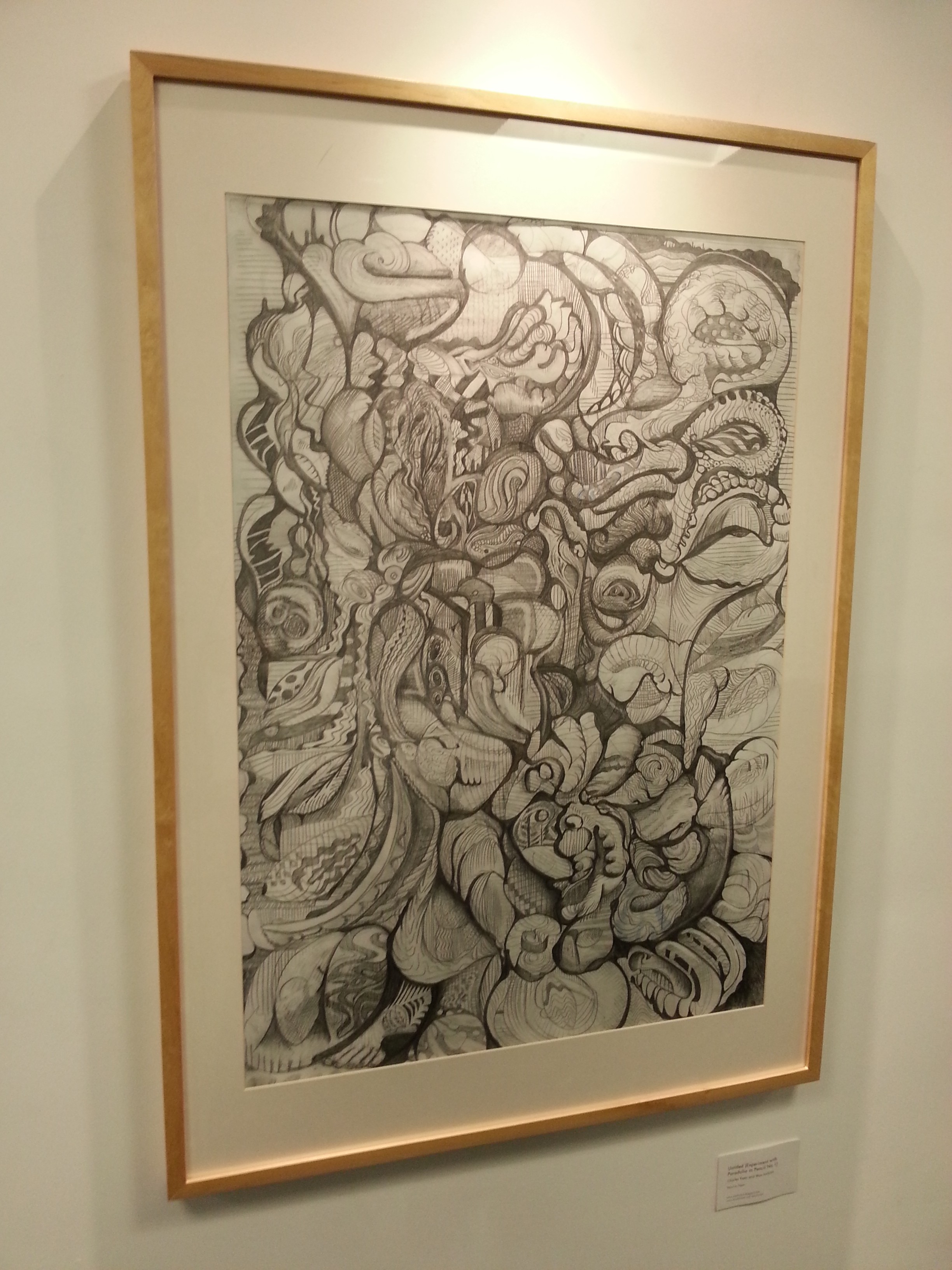
Charles Keen and Max Jackson

Emma Tann
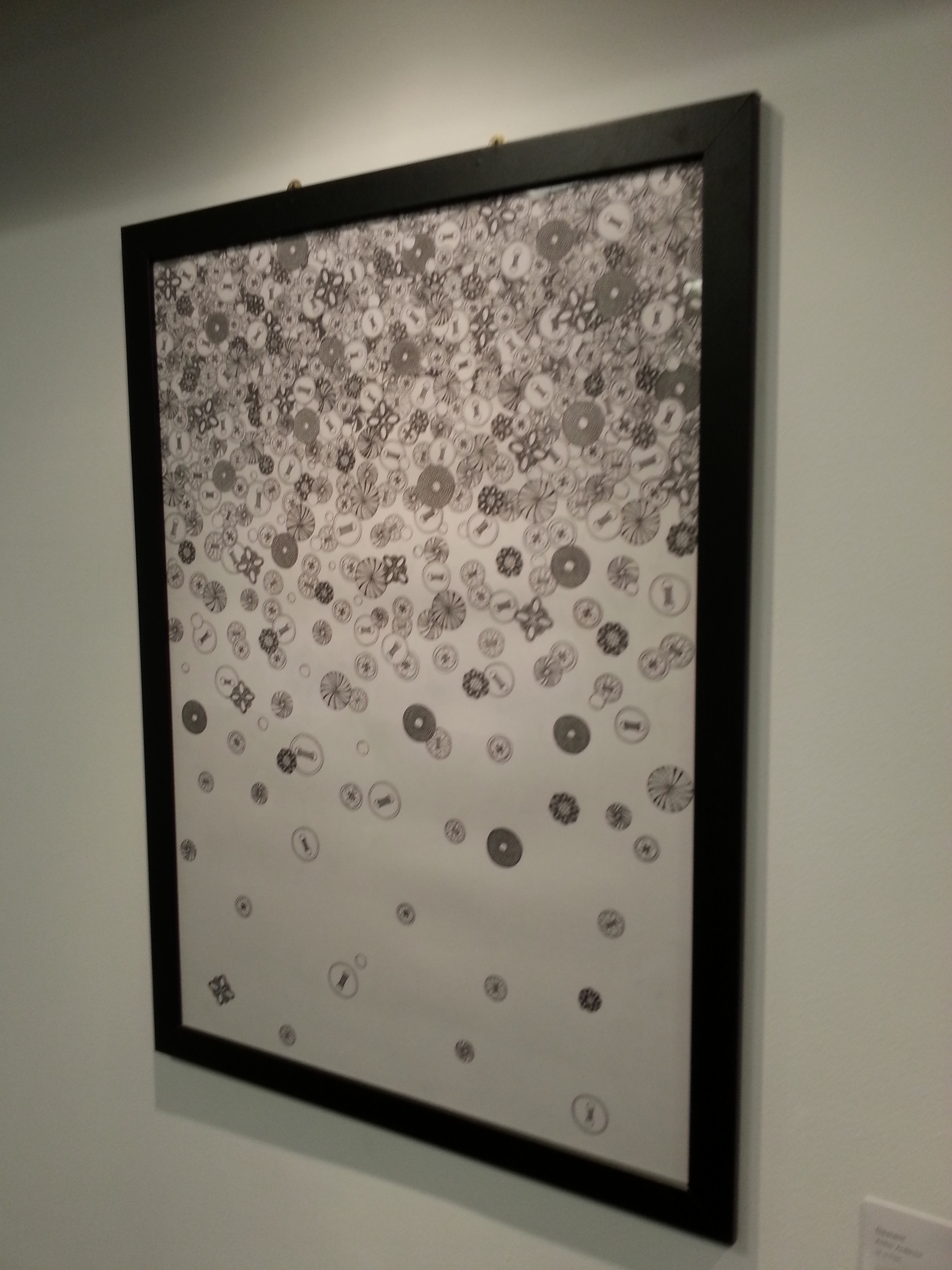
Amber Anderson
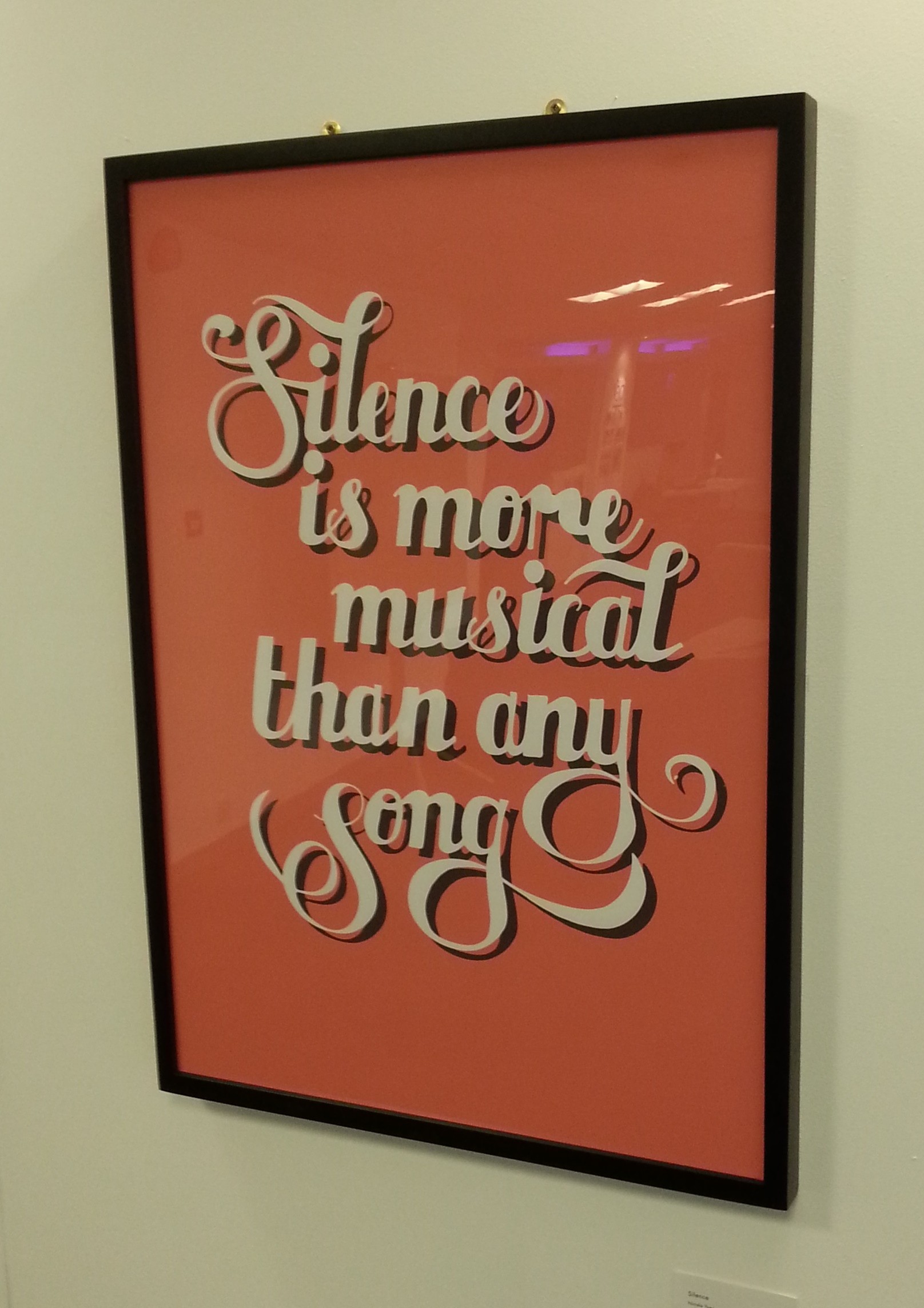
Nicola Yuen
November Dartford Tweetup
[UPDATE: I initially suggested Monday 16th December for next month’s #dartfordtweetup. However, that evening is general assembly of Dartford Borough Council – with compulsory attendance by all councillors. As we don’t want to lose our councillor members for the evening, I’m proposing Tuesday 17th December, 7:30, Royal Oak, instead. I will also check in with the pub – just to ensure we aren’t clashing with an event or party ]
We had the second #dartfordtweetup yesterday evening – 18th November
The numbers are growing – we were nine this time, so nearly doubled, and had apologies from two people who were ill and from five who were working too late. I scientifically calculated that if we keep on at this rate, the entire population of Dartford will be coming to tweetup in about 18 months time!
First of all thanks to the following for coming along:
@Andyclark57 (Dartford Matters)
In case anyone is concerned that that’s a largely male group, at least five of the sick/work apologies came from females. So it’s reasonably balanced.
We had a lively and good-humoured evening. #dartfordtweetup isn’t Fight Club! But I would like to think that people can talk there without feeling that they are making official statements or going on record. So I won’t be writing up reports or anything like that.You might, though, be interested in some of the topics that came up. I’m sure I won’t remember them all but they included:
- Dartford’s pubs, history, changes and closures,
- markets,
- town centre eateries and the ‘early-evening economy’,
- planning,
- Acacia Hall, the open air theatre and entertainment venues in general
- Litter picking
- opportunities for public debate about Dartford
- bin swaps
- Council and Councillors’ uses for twitter and Facebook
- parish and town councils
- Big Lottery funded projects
- sources of local news and information online
If you’ve got any questions about #dartfordtweetup or you have ideas about dates, frequency, time, venue, format – just make a Comment below. Similarly if you want to add anything about last night’s session. Or tweet me @grimbold – ideally using the #dartfordtweetup hashtag, which we should probably all try to cite when we can. [I know it’s a bit long].
Sticking to the formula of third Monday in the month, the next #dartfordtweetup is proposed for Monday 16th December at 7:30pm. Royal Oak. Due to general assembly of Dartford Borough Council being on Monday 16th, I’m proposing that the next #dartfordtweetup be held on Tuesday 17th December – same time and place. That’s getting close to Christmas and people will have all sorts of parties, work deadlines, etc going on. But that’s true for a couple of weeks. So let’s regard this as our own modest pre-Christmas party, and see how it goes?

October Dartford Tweetup

@anthonyjwells and @CllrKeithKelly
We met!
Special mention for @TOWIWoolwich who ventured ‘the wrong way’ along the railway, outside Zone 6 to act as ambassador from the London Boroughs.
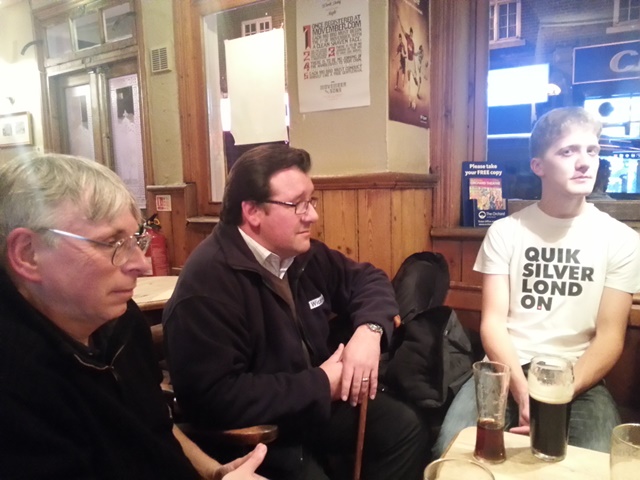
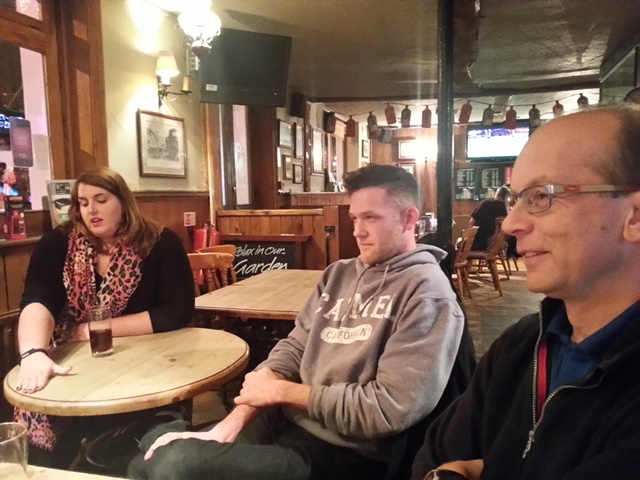
There were six of us in total. The bonus of being able to follow the England v Poland game on TV was offset by the Royal Oak being busier and noisier [and hotter!] than it would usually be on a weekday evening.
No great social or political movement was born on the spot. I think we were mainly interested in just finding more out about each other – though we did have a bit of a foray into town planning.
The striking thing for me was that everyone I hadn’t met before turned out to be different from the impression I had built up through twitter alone. As a result my future exchanges with them will be changed in some way.
Everyone felt it had been fun and worthwhile, and are up for meeting again. Indeed, although this was a small beginning, I had messages via tweets and DMs that amounted to another 12 people who actively want to attend next time. Beyond that I need to check out 8 people for their future interest, and there are another 8 accounts for people who don’t particularly want to meet up, but do want to see news and information.
One obstacle for people was definitely needing really good notice of the date. So I’m proposing Monday 18th November [7:30 Royal Oak again] for the next #dartfordtweetup – and I’m also proposing “third Monday in the month” as a regular pattern until we discover some reason to change it.
I’ll keep using twitter to remind people – and another blog post in a short while to keep a rolling list of who’s coming to the next one. But there are also three things you can do to feed back, or keep up communication:
1. Leave a comment via the link at the bottom of this post
2. Tweet using the #dartfordtweetup hashtag. Some people will pick up on it. You could also keep a search open for it yourself
3. Check out my public twitter list of possible #dartfordtweetup people. You can subscribe to this list – or you can just go and look at it to see what a range of people in the Dartford area are saying, Twitter doesn’t let you post ‘at’ a list – but actually that wouldn’t make a lot of sense anyway. You can also suggest people for me to add to the list, or get me to take you off it, if not appropriate.
Thanks to @Thayer, @anthonyjwells, @CllrKeithKelly, @TOWIWoolwich, and @alastairwood for making the first #dartfordtweetup happen. Thanks to the many people who took the trouble to reply and say they might make it, or would like to come in future.
Looking forward to the next one!
Dartford ‘tweetup’ – 15th October, 7:30pm, Royal Oak
This time I’ve actually suggested a date that I can turn up myself and justify the value of a tweetup
A tweetup is where people who find they are talking to each other, or to shared/overlapping contacts, on twitter meet up in the real world… because they can. That’s it – you live near enough each other to go down the pub and find out what all these people actually look like.
The purpose is:
- fun – meet, talk, laugh, drink
- social – meet new local people you might otherwise walk past every day
- constructive – [optional] discover things that you care about, share views about, want to make better – and find out if there’s anything you can do, or want to do, together.
Twitter is pretty diverse. It would be surprising if everyone who turned up agreed with, or liked, everyone else. So it’s a chance to exercise your tolerance and open-mindedness muscles too.
Me? I like Dartford, I think it could be even better, I like meeting new people, I’m hard to offend or embarrass and I quite like an excuse to drink beer.
Let me know if you can make it. Or just make [really positive constructive] comments via the quite obscure ‘leave a Comment’ link below. Keep an eye, or a search, out for the #dartfordtweetup tag on twitter. There’s also a public list on twitter . It’s built on a friend-of-a-friend basis – so let me know if you want to be added or taken off.
Once we actually meet, I can more easily get your ideas on future tweetups, location, format, topics [if any], people, day of the week, frequency… anything and everything.
best,
Nick.
UPDATES – WHO’S COMING?
Definites:
@grimbold
@CllrKeithKelly
@Thayer
Probables:
@Driver_8_Ace
@MrBell74
@phillipav73
@alastairwood
@TOWIWoolwich
Possibles:
@anthonyjwells
@mandyist
Happy Families
I had promised myself that I wouldn’t indulge in negative rants. My advice to myself is that when I encounter something that offends me, I should try to find the converse, and then figure out some constructive way to make it happen – if only, usually, on a personal or small scale. No point raging about national or global phenomena at a theoretical level.
But…
I do advise people that a good time to write is when they are so moved by something that the post writes itself. So long as they take a little time to reflect and edit afterwards.
My spark came from the twitter discussion this morning about Conservative party proposals for a tax allowance for married couples.
[BTW. People who know me also know that I’m a-party-political. If you can figure out which Party my beliefs and actions consistently map onto – and why I should join one of them – please let me know. They also know that I think people can/do contribute to civic society in all sorts of ways beyond paying tax… through the *way* they do their work, live their lives and use their spare time. I also believe that finding more opportunities to channel those *ways* into practical/communal activity could reduce taxation, create community cohesion, and give individuals more fulfillment – neighbourhood by neighbourhood. Crucially this means seeing each other as ‘us’ and not as ‘other people’. It should be the aim of every politician to find and cultivate that ‘us’.]
As to the policy itself, my wife and I would benefit, modestly. But I can’t see any clear cut case for tinkering with the taxation system in this way – not least because it should be as simple as possible. Society, and the economy, are complex – and give rise to complex interactions. [Yes – I know that’s obvious]. It’s also the case that people are getting harder and harder to ‘segment’ in terms of their combined economic, employment, family, health, educational and other circumstances. I know that there are stronger correlations for some groups – and that some analyses of ‘the welfare state’ congregate around ‘multiple indicators’ of dependence, exclusion or non-participation in society.
But I don’t see anything to persuade me that the promotion of marriage, per se, will have an impact on society, or on those critiqued groups in particular, which merits the tinkering.
So I’m left concluding [feel free to congratulate me on my new worldliness] that the motivation is ideological – including intra-party deal-making – or a clumsy bribe. It also persuades me that no-one in this arena is interested in the analysis of complex social and economic systems, hard honest data, or creative and innovative thinking. [And you can talk about ‘nudging’ all you like – I’ve blogged before about how I feel about paternalistic nudges.]
No-one?
Well – that brings me to what I want to rant about… because none of the above was a rant.
“Families”
The word “Families” and the way in which it is used by all the major political parties in this country. The Conservatives appeared to want to appropriate it – describing how “Families” have been hit by economic crises and various species of inflation. Labour, seemingly terrified that this will happen, have proved equally keen to empathise with “families suffering under this Coalition government”.
The media, to my horror, seem to reproduce this language in reports drawn from party press releases and [9 times out of 10] with no pause to reflect on this use of language. Because “Families” here is almost always being used to mean – ‘people’, ‘most ordinary people’ or ‘people like you and me’. It’s not usually being used to address a specific category [if one could actually be found to stand up at a simple level] in the way that policy might approach ‘teenagers’, ‘pensioners’, ‘people with long-term illnesses’, ‘part-time workers’, etc, etc, etc. “Families” is far too broad to function as an analytical or explanatory entity – and they know it is. And so do the media – who nonetheless seem to treat “Families” as a self-evident natural kind – hence one that all viewers, listeners and readers will recognise.
I live in a family unit – if that’s what they mean. I share a house with my wife and two teenage children. We pool our income, share our shelter and resources, and we look after each other. We are dealt with, for many purposes, as a single unit. I live in a family unit because I happen to have chosen to share the last 30 years with one person, to have children with them, and to live with them all.
Similarly I grew up in a family unit, which existed for many of the same reasons.
I’m also, in a more basic sense, a member of a family because I have parents, grandparents and other more distant genetic relatives – as we all do.
But when politicians use “Family” in the contexts they have recently, they are loading it with connotations of normality, inclusiveness [not like those “other people”], and virtue – such as the Conservatives’ variations on “decent, hard-working, families”. As I say, it’s meant to imply, in a fuzzy lets-not-analyse-it-too-closely way, people like us, people who share our way of life, people we think are deserving of support.
Why is this not challenged more often – on simple grounds of clarity and meaning, let alone fairness or ideology?
Politicians seem to be locked in a mutual-hostage consensus about it. Nobody got sacked for saying they support ‘families’.
I end up wondering if there are more people in family ‘families’ than other people – that this is simply a code for the majority. I doubt it – but I’d love to see the numbers. Are pensioner couples ‘families’ – or does it depend on whether they have children and grandchildren, or how near them they live, or how often they see them. Is an absent parent in a family – if they are still ‘financially connected’ or not? Are parents and adult kids ‘families’ if they live apart but the parents contribute to university fees and maintenance?
I suspect that, over the population as a whole, people who identify themselves with ‘Families’, or would go along with it as a meaningful concept/group, are either in the minority, or it’s a close-run thing.
So I have two conclusions.
1.’The Family’ is emblematic of a bundle of ideology, which probably no-longer stands up to close analysis, but which the Conservative Party still holds onto in preference to doing that analysis or coping with the consequential need to re-group and re-state values in the face of a changed and changing world. But equally one which Labour, or the Lib Dems, are too afraid to deconstruct because…
2. Some sophisticated analysis of demography and voting patterns suggests that a large proportion of voters in the crucial ‘swing seats’ also adhere to the un-examined notion of ‘Families’, and believe it applies to them and to people with whom they have common cause.
Outside of those possibilities I can’t think of any reason for this dim mantra of “Families, families, families” – even though I’m in one. The fact that my family is a family is probably one of the least useful ways to understand the four of us, or to give us ways to participate better in society and economy.
[BTW – again, for point 2, feel free to ironically congratulate me on my new-found worldliness].
So I assume that tax allowances for ‘the married’ is in the service of ‘The Family’ for those two reasons. I’ve heard the post hoc rationalisation for marriage as something that contributes to all kinds of ‘living right’. It’s based on a particular sub-set, or ideal model, of marriages. For every one of those we can all think of marriages which are ‘net negative’ and of correspondingly positive relationships and attitudes where no marriage is present. Go on – show me the data… or what supporting data might even look like.


 Nick Buckley : Practically Mindful