
The next Dartford Tweetup will be a picnic! No… literally… a picnic.
We are trying to offer something a bit different from the usual “bunch of blokes in a pub” perception. And to be fair that is what we have often been!
A picnic offers something a bit more family friendly and I’m planning to be there from about 6pm myself, to start the weekend. If the great British summer does live up to its reputation and we get a shower or two, then there is still the option to retreat to The Foresters in Great Queen Street.
So that’s Friday 25th July at St Edmund’s Pleasance, Dartford – from about 6pm onwards... [DA1 1RZ] until midges, darkness, temperature etc, drive us away. Bring something to eat, or even to share, some refreshments and perhaps something to sit or recline on. Maybe even bring your family.
We will, of course, look after the place. Since about half the regulars are also @dartfordlp litter pickers – we will probably end up making a total net reduction in the amount of litter there!
Look forward to seeing you.

.
Introductory Mindfulness course, “Mindfulness is Now”.
Starting Tuesday 24th June 7:30pm at the What If gallery* Dartford.
A course of four 1hr sessions on consecutive Tuesday evenings led by Dr Nick Buckley. [24th June to 15th July inclusive].
Mindfulness is a collection of simple mind-stilling exercises which you can be taught, and attitudes which you can develop for use during every day.
The scientifically documented benefits include reduced stress, calmer handling of difficult situations, improved sleep, better concentration and, as a result of all these changes, better physical health.
This is a friendly relaxed starter course in an informal setting. But even four sessions, with 10 minutes practice a day in between, will change how you feel and behave… and it could be the start of something bigger.
Fee: £48 [inclusive of VAT] for the whole course, payable in advance or at the first session. This covers the sessions, a document pack, audio downloads and a daily e-mail prompt
Subsidised for the Dartford community – at less than half the price usually charged by Mindfulness at Work for a public course. Preference will be given to people from the local area. The company has also delivered many workplace courses to businesses who now use Mindfulness as part of their employee well-being and health programmes.
Only 10 places are available – book now by calling Nick on 07958 516967 or mailing nick@soshall.net
*What If Gallery
67 High St
Dartford
DA1 1DJ
Don’t Vote Politically ?!?
This post is yet another interruption to my attempt to work through the 9 questions I think politicians using social media should ask themselves.
But actually it’s a bit of a live footnote to the piece I wrote about Question 3, “Are you local?” last Thursday.
Dartford Labour Councillor Jonathon Hawkes tweeted yesterday that he had seen a leaflet, for a local council by-election in Stone, which said “Don’t vote politically on 27 March” and was signed by The Conservatives. I haven’t seen the leaflet. But nobody has disowned it, and a local Conservative councillor has entered into a debate via twitter about what it means. So I will work on the assumption that existence of the leaflet is uncontested fact.
Also came across V odd leaflet in Stone today “Don’t vote politically on 27 March” signed The Conservatives…. #fail #pulltheotherone
— Jonathon Hawkes (@CllrJonHawkes) March 23, 2014
So what does it mean?
On a simple level it is a contradiction in terms. Voting is a political act.
It may well mean, “Don’t just vote party-politically”. If so, I have two reactions. The first would be that it reinforces the idea that “Politics” is this game that parties play, and which we might lazily conform to when voting, or the idea that as a result local issues aren’t ‘politics’ as such. I’m not happy with that. I think that people should be encouraged to have a wider sense of what politics is – in particular that, on a local level, it is about anything which affects the local community and which needs to be decided via collective debate/opinion and by addressing any imbalances of power which prevent that.
So my second reaction is that if, by “Don’t just vote party-politically”, the publishers of the leaflet mean ‘look beneath the national, daily news, Cameron vs Miliband cartoon and look at the individual candidates’ then they might be advocating something similar to my views about representation in “Are you local?”
In particular that might make sense if the leaflet was issued by an individual candidate, who was taking a line on local representation similar to mine.
But if this leaflet was issued by “The Conservatives”, what are they saying? To bother publishing it at all means that they think ‘voting politically’ would reduce their count. So that means they acknowledge that on some level Conservative politics are less popular than they would like, that they can see why people who voted on party-politics would vote for them less, so they want people to look beyond that. There’s a case they could put, for not making local candidates suffer for something like “the mid-term unpopularity of the government in office, that all parties suffer”, though we are only a year from a general election. Without that gloss it looks a bit like they are saying, “OK – fair play, you don’t want to vote for The Conservatives but, on local grounds, vote for us… The Conservatives.”
If it’s a message from an individual candidate, who happens to be standing as a Conservative, then different considerations come into play. If you want to be considered on your own personal merits, record and specific local policies, but you accept voters’ reasons for not wanting to vote [‘politically’] for the Conservatives, why are you standing as a Conservative and not an independent? [I know, the common sense answer is, “get real Nick, what chance would I have then?”]. If the candidate sympathises with such voters about some Conservative policies or performance that make them want to vote otherwise, what’s wrong with the candidate putting their hand up to that and saying “I’m not impressed with some of those either [e.g. … and … ], but I’m more Conservative than anything else, so vote for my personal position and my broad party alignment? Would the local party tolerate that? If not – then we are back to a contradiction in the leaflet.
One final thought: Although I’m strongly in favour of people voting in local elections about local representatives and local issues, and I worry that local elections lose out to national party cartoon sound bite politics, I do recognise a connection. This is where national policies can be seen to have specific local consequences or implications. I would like to see more of those candidates who choose to stand on party lines taking responsibility for, and producing hard local evidence about, the overall impact of that party’s policies on this Place. Because that should amount to why they are standing locally for that party. Otherwise I encourage you, candidates currently of all parties, to stand on a personal manifesto for your Ward and for Dartford Borough.
A couple of thoughts and questions:
Does anyone have a copy of the leaflet that they could share? It would help to see the exact wording and layout.
Does anyone responsible for publishing it want to say, at greater length, what “Don’t vote politically on 27 March” was intended to mean?
If you are a voter in the Stone by-election, and persuaded to look deeper into each of the candidates’ positions, then have a look at the Q&A published via Dartford Matters. These read primarily as personal testimonies. I leave it to you to decide whether you can also hear a ‘party’ backing track playing underneath each, and whether this adds or detracts.
When Councillors take to the tweets. Part 3
 Question 3: Are you local?
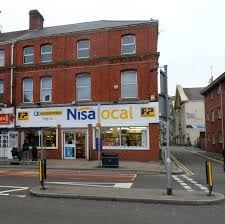
This has been made a matter of contention in Dartford – both at parliamentary constituency and council ward levels. But this post isn’t my response to those instances. I go way back on this one.
Friends know that ‘local’ or ‘Place’ are very important to me. They are part of my answer to the question, “Why has my utterly depressing experience of national, and even global, government not made me just give up on politics and democracy altogether?”
My answer is that you can get to grips with problems, chip away at tribal politics, discover lots of agreement, bring back people who gave up on politics, access new ideas, and make small but real differences… and so on and on and on and on… if you genuinely focus on a Place. Why capital ‘P’? A place with an identity and a real centre, but small enough, and with few enough people, for you to really get to know them.
My challenge to any politician is not ‘Are you local?’ but ‘Can you be local?’
The answer might be, “Of course I can. I represent a majority of the people who voted, I do case work for individuals, and I stand up for this place against other places when policies are made or locations chosen, which are good or bad for it.”
Again making it clear that this isn’t about the politicians in Dartford, I would say this still fits an electoral approach where you stand on behalf of a party which you know has majority support, or where you are active in persuading enough swing voters to shift that way, and where your actions once in office are then driven by party loyalty and party policy. So you represent party first, and then Place when it’s convenient. Under those conditions you aim to maintain the local popularity of the party, not necessarily to represent the totality of local people. OK – sometimes these amount to the same thing – or are near enough not to matter, or for people to think that this traditional arrangement is odd.
What’s the alternative? “You try getting elected unless you can persuade one of the main parties to adopt you”. [UKIP has muddied this argument for me, I admit]. Or getting elected without at least some party to hang your nomination on – such as ‘Local Residents’. Actually individuals do get elected against that trend. But when they do, or when a very local party thrives for a time, I’d argue it’s precisely because they have got closer to really “representing Place”.
A lot of Councillors from the mainstream parties also spend much of their time representing Place in the way I’ve described… without thought for party battles.
So how does this relate to “Are you local?”.
I think that being local, in the sense of having lived for a few years in the place where you are seeking to be elected, is an advantage. It’s a head start in understanding people, history and issues. It’s also a head start in actually caring about that Place and those people – as opposed to ‘caring’ for the instrumental reason that you want to be [re-]elected and you want to add a seat for your party. [Yes, of course you can want both – but which are you putting first and why?]. I have come to feel like that about Dartford, somewhere during the last 23 years. I didn’t spot when it happened. But I now care about Dartford, it’s my home, it’s my community – I care about what happens to it and, in particular, I defend Dartford and its people quite fiercely when others make lazy or ill-informed comments. I can’t imagine being able to represent anywhere else than Dartford [in Parliament] or my end of Wilmington [on the Council]. Because there’s nowhere else that I would now be able to draw on those feelings for. To be honest I can’t imagine being in Parliament or on the Council anyway – so this is a bit of a cheat.
BUT
- You can live somewhere for years and never engage with it or come to think of it as a Place you care about. It can be just your physical surroundings, through which you travel in getting to/from your personal castle. You might, as a result, have practical self-interest in decisions that affect your home or your pocket. But being local in this way doesn’t automatically give you a special status, a right to represent, in comparison to someone else.
- Conversely you can immerse yourself in, and engage with, a Place which is not your home. You may have to work harder at explaining why… why that Place? You may have to work harder at dispelling the idea that this constituency or ward is a convenient vehicle, chosen by your party, to get you into office on their behalf, or to ‘get a bit of practice’. But if you “aren’t local” this challenge might make you focus on being more engaged than someone who thinks it’s a given because they live there. It may put you in a position to innovate. It may mean you are free of local factions and vested interests. You certainly need to be seen to be listening hard, and often.
What has this all got to do with tweeting councillors?
It means that a question politicians can ask themselves is, “Am I using social media to maximise the way I represent this Place, by getting new insights into what all local people want, need, know and are prepared to do alongside me?” You won’t agree with all local people, but you may be opened up to insights, and offers of help or action, which would be lost if you just used social media to broadcast messages. On balance, maybe that’s a new way of being local.
[Note: Twitter has many limitations, if also some strengths, in this field – but I’m referring to ‘social media’ of which twitter can be one valuable component… providing glue, signposts, personal connections, and quick subjective reactions to events]
Where you live, is somebody else’s somewhere else…
 I’m working on my next post, in the series of 9 questions related to politicians’ use of social media. It’s about being ‘local’, and I’m probably going to complete it today. [As expected, the whole 9 questions thing is turning into a bit of a marathon].
But whilst thinking it through this morning I had a vivid memory of an experience I had when I was probably about 7 or 8 years old, which changed my ability to see the world through other people’s eyes. I’m sure lots of people, perhaps everyone, have had the equivalent moment. But it seems particularly relevant to thinking about what it means to be, and to represent, ‘local’. It’s also caught up, somehow, in my reaction to the reporting about the Ebbsfleet ‘Garden City’ over the last few days, and the suggestion that shifting power from the local authorities to a development corporation is necessary enabler.
I still have a clear picture in my head of the moment when the world did a kind of 360 on me – something I felt almost physically. I was walking around the corner at the bottom of Park Drive, the road where I’d spent all but the first few months of my life, into Manchester Road. This was in Stocksbridge, a steel town in a valley about 10 miles west of Sheffield. Manchester Road bisects Stocksbridge on its way from Sheffield to… yes… Manchester. To its north is [was] mostly the steelworks, and up steep hills to the south lies the settlement.
As I turned the corner a car came past heading west. I glimpsed, but didn’t really get to focus on, a face looking idly back at me from the front passenger seat.
At that moment for some reason I had a vision of myself sitting in that car, but passing through a place called Mottram – further to the west. I thought about how Mottram, and the pedestrians there, looked to me when we drove through. I had this dizzying sense that this was what Stocksbridge might look like to that person, and that this was also what I looked like. “Dizzying”? Yes, because it wasn’t just some idea or sentence like the ones I’m now writing. It was something I experienced directly, like an almost out-of-body experience, for the first time. After it – everything felt different. I can only remember that it was different. I can’t remember what it was like before.
What I think it must have felt like before was that the uniqueness of Stocksbridge, this almost world-embracing normality and familiarity, this sense of how things are… was the same for everyone else. I must have felt that Stocksbridge was ‘here’ to everyone in the same way as it was for me. Underneath that, there must have been a more general feeling that the world looked, to everyone, exactly the way that it looked to me from where I was standing.
That instant, of almost tele-porting inside the car and looking back out at myself, but at the same time being me looking out at a stranger in another town on the same road, must have taken this away forever.
But what it gave me in return was a world in which, as for the anonymous pedestrian in Mottram, other people’s experience of their own home town was as unique as mine, and as inaccessible to me as mine was to them.
‘Place’ is very important to me. It is the beginning of how I see huge, abstract, intractable political questions become tractable and meaningful on a human, personal, level. This means applying these questions to a particular Place. It means growing them back out of that Place, to check them against the abstractions for realism and humanity. But to do that you have to be able to recognise the relationships that people have with Places, and particularly with Places that have always been, or have become, important to them. Above all it’s about recognising what “home” might mean.
Ebbsfleet – which is both a new and an old name in these parts – and Dartford, Swanscombe, Greenhithe and Stone, are all ‘somewhere else’ to most of the people watching the news reports. But to thousands of others they are already “here”, “home” or “my place” in ways which are special and peculiar to them. To many thousands more the new settlement will be somehow expected to become “home”. Every decision made, by local people, institutions and businesses or by people from the other end of the country, needs to find a way to take account of that.
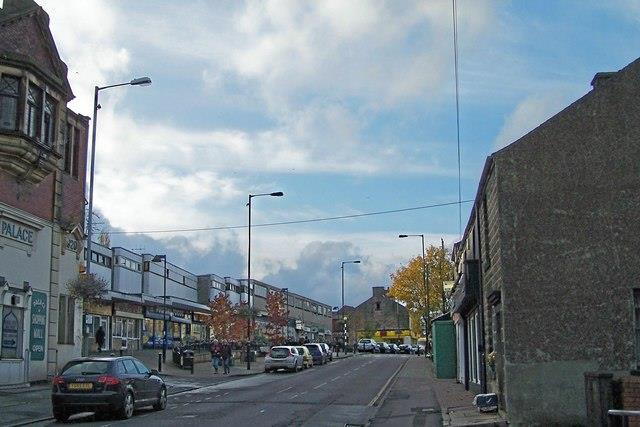
[ Mottram is a smaller settlement than Stocksbridge, on that old ‘Woodhead Pass’ route from Sheffield to Manchester, which has probably given way to the M62 for many journeys. It was significant to me from special family car outings to visit Belle Vue zoo in Manchester. Mottram was around the half-way mark, sometime after you had descended from the moors – so it was probably a big part of the “are we there yet?” story. So the incident I describe must have been some time after my first couple of trips to Belle Vue – hence my placing it around the age of 7 or 8. The image above is a more recent shot of Manchester Road passing through Stocksbridge, a few hundred yards before the bottom of what was then ‘my street’]
When Councillors take to the tweets. Part 2.
Engagement!
My second question in the list of nine was, “What is Engagement?” My own understanding of engagement rests on another question, which I have previously written about. In slightly old-fashioned language, “How do you treat people as ends in themselves?” In turn, you can understand this by considering the opposite – treating people as a means to an end.
It’s a challenge I first put to Marketing. How do you Market, even ‘’nice cuddly Marketing”, without treating people as a means to an end? That is, without seeing them solely as a mass of people who will buy [as much of] your stuff [as possible, at the highest possible price] and deliver your turnover or profits? Most marketers probably see that as the only sane focused description of their job. That includes those who have started to talk more about ‘Engagement’ since the advent of social media. These accept there’s now a return channel in response to the messages they used to just broadcast. But for most this is still bound up with the ultimate goal of causing ‘consumers’ to act in a certain way, or at best it is about getting back ‘thumbs up’ signals to say you have hit your target, or it’s about people allowing themselves to be the means by which your promotional messages are passed on to others.
So how would Marketing treat people as “ends in themselves”? It would involve them as equals, give them full information, and the means to discover and understand their own real needs. It would help you to improve your products in response [on those terms], set an affordable price [not the same as a maximum achievable price] and make you part of a bigger sustainable eco-system. This is ‘Engagement’. The strongest argument against it, probably generalised as “realism”, is that unless every other vendor in the world does the same thing you are putting yourself at a relative, and perhaps fatal, disadvantage. The argument in favour of this kind of Engagement is that it is morally right and creates a better society… including for the owners, shareholders, managers and workers in the vendor organisation.
What’s this got to do with politics?
Firstly, if politics is about Party and your party is effectively a brand, then politicians face exactly the same dilemma as Marketers. People are there as a means to an end – to buy your political product by giving you their vote. Or they are there as an end in themselves – to work with you to make their own lives, community and thus the lives of others… better. They are voters or citizens.
Actually, though, are the two mutually exclusive? Politicians will argue that you have to get people’s votes in order to protect them from that worst of all worlds – one governed by ‘the other lot’… those purely power hungry, citizen disregarding, villains in the other party. That’s still maybe OK, if it’s an honestly held belief, until you reach the point where this end is to be achieved “at all costs”.
This year we are starting to commemorate World War 1. One way of looking at that conflict is that it was overseen by people who said, “We will save our people from being ruled over by the other lot, at all costs, even if it kills them.” And it did – by the million.
That may seem a long way from a bit of local politics on social media. It is. But I hope it shows the ultimate conclusion of treating people as a means to an end.
So I think that, like the Marketer, the politician has two choices in their use of social media.
ENGAGEMENT: Using these channels to involve people in understanding and articulating their needs. Using these channels to involve them in defining and [crucially] committing to work towards as well as fund, changes which better meet those needs. This involves a lot of listening, reflecting and dispassionate information sharing. It demands self-restraint about defending or condemning the status quo for the sake of it. Engagement uses transmit and receive.
CAMPAIGNING: Using these channels to push messages, often selectively, with a view to influencing how people vote. This includes focusing excessively on ‘the other side’ and their conduct or personality [or ‘integrity’], rather than on what people need to know, or need to be given the means to consider. Campaigning narrows the agenda to a set of familiar well-rehearsed arguments and rituals. It treats ‘voters’ as a means to an end. Campaigning uses the receive button only to spot when things are said which can be affirmed or contradicted by the politician … not learned from.
So I would urge politicians using social media to ask themselves whether they are Engaging or Campaigning, and which is appropriate. I think there’s obviously a case to make for Campaigning during an election period, particularly if you spent all your other time Engaging and have now set out your [complex, messy and sometimes at risk of being dull?] policies. But the rest of the time I think Campaigning gets in the way of Engagement and will clog the channel, or deter people who might otherwise have been drawn into Engagement online. Those might be the very people who would never have become involved via traditional channels in the past.
Even if I’m broadly right – is this just a counsel [pun intended] of perfection? Am I asking too much, or too much too soon? Probably. But it’s good to have something on the horizon for people to work towards and sign up to.
Also, I’d be a terrible hypocrite if I wasn’t engaging and listening. So what do you think? If you are a Councillor or MP, do you accept my split between Campaigning and Engagement? Do you think you are currently striking the right balance? Do you have the tools, resources and knowledge to Engage more online, if you thought this was a good thing?
If you are a member of the-rest-of-the-public, do you want to be Engaged with? Are you put off ‘community’ social media by partisan campaigning amongst online politicians or not? Do you feel politicians regard you as ‘a vote to be won’ or as an equal to be drawn into running your community? Do you think these two actually go together, or agree they are at odds with each other?
How can I improve my argument? What might persuade you to try to create more Engagement? What might it do for us?
Should we ask our online politicians to sign up to a ‘Pledge to Engage’ kitemark?
When Councillors take to the tweets
 I have taken to listening to those Dartford twitter conversations which include one or more of our local Councillors.
What I mean is – I have taken to listening rather than answering or challenging. This is recent and I still lapse. But when I do lapse, I now try to ask flat factual questions, or seek clarification.
I’m aiming for listening mode, with this particular group, because otherwise I will become part of the problem. I will be positioned, whether I like it or not, on one ‘side’ or other and before you know it I will be affirming that label as I fight back in ill-tempered ways.
Instead, I think it would be useful for someone to step back and look at a bigger picture, look across several of the recent arguments and what they are about. Then I can do a better job [certainly better than in 140 characters] of explaining what it is that is making me quite angry… why it’s the way and not the what that makes me want to react.
I’m going to tee up some questions to help with this. I’ll stop when I’ve reached my ‘word ration’ for the day, and carry on tomorrow. The list for now, and I’m not going even going to scratch the surface today, is:
- What do I think Politicians should use social media for?
- What is Engagement?
- Are you local?
- When are you… ‘you’… and when are you ‘a politician’ ?
- Do anonymous or one-dimensional twitter accounts matter?
- Is it war, or peaceful construction?
- Is there such a thing as ‘just information’ ?
- Do we need local ‘war’ to stop people being bored by Politics?
- What is Politics anyway?
So:
- What do I think Politicians should use social media for? I think they should use it to Engage with the people who they represent, or want to earn the right to represent. That is all the people who are eligible to vote for them. In this case, that’s all such people who use social media or who might come to use it in the next year or two. I think they should also use it to share information which is relevant to local decision making, or to help people understand the place they live in and how it is changing. I think that they should not use it as a one-way broadcast channel to push political messages or, in particular, messages which focus on the shortcomings of their political opponents – be that individuals or parties. Why? Because it is a waste of the unique multi-way channel that social media has gifted us – particularly if it tells everyone else that this is the ‘standard’ way that Politicians are going to carry on using it. Because it is disrespectful to other people who use social media. Ultimately because it diminishes the role that those Politicians occupy. So what I’m saying to people who use social media in that way is not, “This is a kind of social media ‘sin’ that makes you a bad person!”. I’m saying, “This is a mistake. There are better ways than this to get what you want. Unless…”
More of these questions and answers tomorrow… or at least the day after. This feels like starting to blog all over again. I wonder if, like Thomas Sterne, I’m going to find that life moves faster than I can write it down!!!
Dartford Big Local project needs a Community Development Worker


Dartford BIG LOCAL is an exciting opportunity for residents to use at least £1m to make a massive and lasting positive difference to their communities. It’s about bringing together all the local talent, ambitions, skills and energy from individuals, groups and organisations who want to make their area an even better place to live.
This is a Big Lottery funded project – run by local people. The project now needs a Community Development Worker to move things on over the next 12 months.
Follow the link at the bottom to download an advert which gives more information about the project and the role.
If you want to be considered, you now only have until next Friday – 28th February to return a completed application form.
The first step is to email sharon@hlcdartford.org.uk or phone 01322 311265
Next #dartfordtweetup – Monday 17th February. 7:30pm Royal Oak
Sticking to the schedule – 3rd Monday in the month at 7:30pm – we will be back at the Royal Oak next week.
But one item on our agenda will be whether to stick with a constant venue, or to take the #dartfordtweetup ‘on tour’ around the Borough, so that we are handy for different people on each occasion. This was raised on twitter during the last few weeks – not least out of admiration for the George and Dragon at Swanscombe.
We can discuss this thoroughly on the night but for those of you actually check this post rather than just see the reminder tweet, I’m attaching a warm-up poll. If you’re really interested you can also leave a Comment suggesting new venues, or explaining your preference to stay central.
What else?
The last tweetup had 10 people, but that included two new faces, so the overall pool of Dartford uptweeters is still growing.
The gatherings are taking on a certain character, which is something else we can talk about next time. With a leavening of discussions on football and music, the overall tone of the thing is quite “civic”. That’s maybe not surprising since the people who are most visible to each other as Dartford tweeters are those who tweet about Dartford… so that interest is what we most have in common. I say “civic” rather than “political” because although several regulars are councillors, and party political rivalry occasionally surfaces, the conversations are more about the town, planning, history, and increasingly about doing things for/to the town on an innovative and maybe volunteering basis.
There seems to be some appetite growing around doing [and organising/facilitating] things online and off, which are pro-Dartford and politically non-aligned. It also means we are becoming more interested in parallel projects such as the Dartford Arts and Culture Network and Dartford Big Local… plus how to share and connect between them. The reborn Dartford Matters , and the manner of its rebirth, may also be part of that story. We can talk about what all this means on Monday.
I think this atmosphere of ‘non-alignment’ is distinct from another discussion about whether party political jostling amongst councillors via twitter is a waste of the channel. If there is an overlap between the two topics I suppose it’s that most councillors who come to the #dartfordtweetup will tell us that doing things to help Dartford, make it better and help people is their main motivation and what they spend most of their ‘councillor time’ doing. That’s certainly borne out by the conversations we’ve all had at the Royal Oak, if not by some of the threads on twitter – which I aim to blog about separately.
But before all that, we should maybe pause and confirm that we are happy for this to take root as the character of the #dartfordtweetup – i.e. a social gathering but with a strong leaning towards ‘civic’ matters? I ask because monthly I tweet to over 50 people with reminders for the tweetup. About 20 of them have been to at least one gathering, or have only been prevented by circumstances. At least another 10 are people who, amongst lots of tweeting about other things, have expressed views about local issues or events. The remaining 20 largely seem to be sociable people who might come along to the right kind of thing, on the right night, if they have time… but aren’t fussed either way about ‘civic’ stuff. Nobody has ever taken me up on the offer to stop sending them reminders if it’s of no interest. So outside the ‘core 20’ there are 30 people who haven’t told me to **** ***! go away, but never come.
Are we happy to settle in with the way the group hasnaturally evolved, perhaps gradually picking up a few more people as the weather picks up etc. Or do we want to actively grow this into a bigger and more eclectic thing?
If the latter, one thing the regulars could do is adopt someone they think might enjoy it [yes, it is for fun after all] and persuade them to come along next week.
Next #dartfordtweetup – Monday 20th January. 7:30pm Royal Oak
Happy New Year to all you Dartford tweeters!
.
Here’s the next date for your diary – Monday 20th January, 7:30 at the Royal Oak in Dartford. A chance to huddle together for shelter against January’s seemingly incessant wind and rain.
If you like planning ahead then also put Monday 17th February and Monday 17th March in your diaries too – the last of those is St Patrick’s day! As usual, though, dates and venue are all a matter for feedback from you. If you want to change day, frequency, venue.. just make a suggestion via the Comments, or at the next session.
Meanwhile, a few notes on December’s gathering. These were delayed by the Christmas season, and may be a little faded as a result. Again – let me know if you’ve got any feedback or points to add.
There were 11 of us this time, so the group is still growing, and we had new faces in the form of Andy L, Andy B and Kate. I also had messages from about another ten people.
Although there were some conversations that included everyone, particularly at the start, there was more of a tendency for us to break up into smaller conversations and one-to-ones, particularly as there were more people to get to know. I think this worked fine, and there was an easy-going pattern of people joining in when they overheard something across the table.
Topics covered included:
- Football – [along with a suggestion that Dartford’s Councillors ought to take on Gravesham’s in some kind of charity match.]
- The town centre and planning – ideas about land use in the very centre of town and the best use of the former Co-op site. But more generally the planning process and how to engage people with the Town Plan – which actually has more influence than late-in-the-day public input to individual applications such as Tesco’s.
- Music – personal preferences, old bands… giving way to some reminiscing amongst oldies like me.
- Various sorts of web proposition to benefit the town. There will probably be more discussion of this on the Google+ Dartford Community in the New Year. But it’s becoming clear that there are several different things this could be; from the fully functional “web street” for Dartford retailers floated by @mikejharrison [with payment and delivery capabilities], to a more general ‘directory’ of local businesses, organisations and events. [See Tenterden for an example of one variant]. How a Dartford web presence was funded, managed, sold, endorsed and so on, would vary a lot for each of these variations. Some of them also point towards a fully online extension of Dartford Living, so it would be good to see @vijayfromkent at a future #dartfordtweetup.
- Litter and litter picking
- The giant picture of Dartford market which is going to be “crowd-painted” (? my phrase) for the Library
- Street parties
- … and of course, Christmas.
There were probably lots of other conversations that I didn’t hear, or that have slipped my memory courtesy of all the Christmas festivities. So let me know, or add a Comment, if I’ve omitted anything important. That’s because these posts are building into a bit of a history of the tweetup and also give an idea, to people who are thinking of coming along, of what #dartfordtweetup evenings are like.


 Nick Buckley : Practically Mindful