It matters how you get there…
 I’m discovering lots of things.
Sometimes it’s revisiting old themes and finding that I’ve finally got to the bottom of them – despite a lifetime of assuming that ‘the big stuff’ always has an irreducible mystery at the bottom because of the nature of our minds, or the limits of our perception. Other times it’s the discovery of new connections between what used to be in different compartments – science, business, psychology, ethics, art, history, politics… life? It’s not an excitable process either – it’s more like a deep comfortable satisfaction. Perhaps I finally passed 10,000 hours in the practice of reflection and deduction. Or I’m just getting old, complacent and conceited!
I don’t kid myself that I’m discovering anything fundamentally new. If it’s big – somebody is bound to have been there before and left a Norwegian flag and some empty herring tins. Even small things… next time you coin a unique pun, or a neat product name – Google it! It’s almost always already out there.
What matters to me is that I’m getting to these places via my own route and under my own steam* – there’s a continuous path behind me – rather than being helicoptered in via a book or course. No short cuts, no gaps.
This is what makes the cross-connections, in particular, so interesting. It’s like the way I used to walk to St Pancras station by different routes, and find myself coming out into a familiar square from an unfamiliar side… such that the surrounding area snapped into a different shape in my head. I can be niggling away at some question of neurophysiology only to find that I emerge into the backyard of some pure philosophy… on the other side of a high wall I’d been searching for gaps… for years.
This isn’t high theory all the time – one reason I just realised and wrote the above is that I had spent the preceding couple of hours trying to work out why there were fractures in the social media strategies, and ‘gamification’ approaches, that I am reviewing. Within each I see at least two quite different ways of thinking – there may be more; that’s part of what I was trying to decide. These ‘ways’ often seem irreconcilable, contradictory – and yet people are using the same language and assumptions about them, sometimes moving between them seemingly without noticing.
I now think I can describe some of these differences – if not account for them – but I’m going to leave it a couple of days to shake down. That’s the other thing I’m getting to the bottom of… patience!
*footnote Read more…
iPod on a Train (A 2-1 defeat for Social Media)
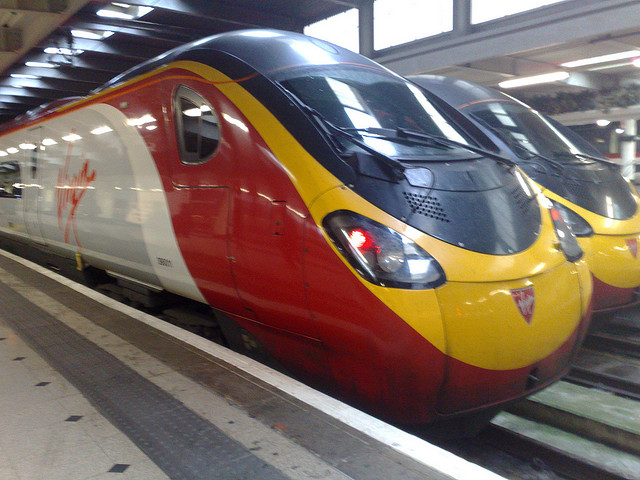
CC Attribution 2.0 James Whatley [whatleydude]
Social Media scored an early goal. An impressive number of people picked up on the ‘general twitter hope’ sentiment which often adheres to these things. It cost them nothing but a moment to retweet, thereby prompting others to do the same, just in case someone had been on that train, or knew someone on the crew… it’s a long shot, “but you never know”. This was goodwill, expressed through and by a network of strangers or, by causal connection, friends of friends of friends.
So what was the equaliser? One or two people had obviously made helpful suggestions, or asked questions, and the Mum’s replies showed that she had phoned Virgin Trains and got a pretty standard ‘You’ll have to wait until Lost Property opens on Monday’. This in itself is a classic passive, do the minimum, response. The Lost Property stance basically means, “…if somebody handed it in, you might be able to find the place where it is now held, and get it back”. This is in contrast to any suggestion that somebody goes the extra mile, identifies the train, current location, and has a quick look at the seats in that bit of the carriage – down the side of the cushion etc, etc.
That’s disappointing. Maybe understandable if you think about the total volume of things lost on Virgin Trains over the average weekend. It’s also not a Social Media thing.
But what is… is the clear absence of any kind of simple real-time listening by Virgin Trains. They are a big enough organisation to put this in place on a formal or informal basis. The Virgin Group also has a large media and internet arm AND a culture of personal helpfulness and intervention. A quick search of twitter for @VirginTrains showed the lost iPod tweets rattling through [along with another story of someone who had lost a wedding ring in the loo on a Scottish service] and also surrounding info which filled in the detail,that this was a 9-yr old girl, who had saved up her own money and gifts for 18 months to buy it, it was engraved, she had precious things stored on it, had always looked after it, was momentarily carried away by the excitement of a train journey to London, and that she and her Mum were very distressed.
For my own part I’d assumed some professional listening and dropped in a couple of pokes in the ribs – along the lines that @VirginTrains could do better than ‘Monday… Lost Property.’ and invoking the spirit, and twitter handle, of Richard Branson. [Yeah… I know]. This was an opportunity for them to pull off one of those “publicity and goodwill money can’t buy” stories – especially in the wake of the franchise debacle – but it’s a non-starter if nobody is listening to the growing chorus of retweets.
And the second goal against? When it became apparent that this was a 9 year old girl…there were quite a few posts on the lines of “What did you let a 9 year old have an iPod touch for”… can’t look after it, doesn’t know what it’s worth, spoilt, what do you expect, and so on. This really made me see red. Why, without bothering to empathise with the distress, or think about how people and families differ, would you bother to drop in a trite comment to that effect? You might think it, but why bother to inflict that on the mother? You’re not helping. Your moralising, even if you could be sure it was well-informed, is adding nothing. So why break off from commenting every few minutes on the hair and costume design in The X-Factor, to add your casual condemnation to the plight of an upset mother and daughter?
So this will remain on my list of empirical psychological questions about the mind-set of Social Media. It’s not even about the fact that people jump to hasty negative conclusions about others, or that they feel justified in sharing these. It’s about why they bother to post rather than just ignore…. that they almost feel a duty to educate others against future folly. I could understand it if there had been offense or insult in the original tweet… but this seems like walking up to someone who is lying in the road, having been hit by a car [through carelessness or not] and saying “Why didn’t you look where you were going?”, before just walking away [possibly even delivering a sly kick to the ribs for good measure]. I’m sure most of these people wouldn’t do that. So what is it about Social Media that changes the rules?
To be scrupulously fair to @VirginTrains , the twitter account itself makes it clear that they are around 8am to 8pm seven days a week – and offers a phone number for emergencies. The tweets started before 8pm, but I don’t necessarily expect a casual social sort of interface to be on its metal right down to the last minute. It’s more a question of where the overall brand listening is, or isn’t, happening for when some kind of social media balloon goes up… even if that’s automated, using frequency-based notifications and so on…?
Meanwhile – it’s turned 8am, even with the clock change, so I’m off back to twitter to see if @VirginTrains seize the opportunity this morning.
In the overall match, though, it’s 2-1 against my hope that Social Media makes a net positive contribution to a better world.
[Footnote: It’s now 2:30pm on the Sunday, i.e. a little over 24hrs after the original loss. The original tweet – which mentions @VirginTrains – is still being retweeted about once a minute. How much would Virgin pay, for a marketing campaign etc, which generated one mention a minute on twitter?]
Working life is like a triathlon…
 I know it’s risky to start homespun advice with similes – sooner or later everything comes out in the voice of Forrest Gump.
But here’s the thought. Working life, or “business”, requires you to perform a number of different roles and functions – each of which demands a different style and consciousness from you. In fact these can be very different from each other, and it is unlikely that you can occupy more than one at once… or that you will be effective if you carry one role or persona on into the next activity. It’s also easy for us to waste a lot of time by taking too long to switch – to truly let go of the last thing we were doing.
Hence the Triathlon thought. Triathlons can be won and lost in the transitions. So triathletes practice them and consciously plan ways to make them as effective as possible.
So maybe we should spend some time identifying and practising the transitions that we make in our working lives – from meeting mode, to writing, to planning, to making calls… not to mention actually being creative or solving problems. It could save a lot of time in the long run, but may also help to make us more aware of these different modes… with wider implications for our work and business.
There’s an interesting flaw in the analogy. One thing that can’t happen in a triathlon [I hope] is for someone to be on their bike, but still be swimming with one leg, or on a run but still wearing their streamlined bike helmet. In work, we do this all the time – still carrying the thoughts, emotions or posture from one task whilst performing another… or with half a mind on the next. So something else to practise, with those transitions, is truly letting go of the last thing, focussing on the current one, and keeping the next one quietly in its box. One thing this may force you to do is identify what is needed at the end of a task, performance or role, to allow you to let go of it with confidence. That’s back to the art of transition again.
In the words of Curly, from City Slickers, “just one thing”.
The photo, by the way, is of William T Burgess. He successfully swam the English Channel in 1911… at his 16th attempt! So there’s a bit of inspiration for persistence thrown in for free.
Standard – but short – rant from me about popularisation-by-panic!
My appreciation of the tabloid drought coverage today [papers, breakfast TV, breakfast TV reporting of papers] hasn’t been made any more sympathetic by the very intelligent, measured, properly researched BBC Radio 4 coverage of the issue last week.
Today is best summed up by the imagery. At a time of drought, much of the media is to be congratulated on its dedication to recycling. However, that’s the recycling of stock photographs, not of water. These are images of cracked earth beds… the bottoms of reservoirs. Of course they crack – they are composed of clay to keep the water in. When exposed this shrinks and obligingly simulates the terrain of an African humanitarian disaster… and is clearly intended to invoke those associations, plus the idea of our green and pleasant land transformed in the coming weeks to semi-arid desert. Other shots of exposed outlet towers shout the same story “LOOK – IT’S RUNNING OUT! FAST!!!”.
Point is, give or take a bit of comforting conservation, there’s little the general public can do to stave this off – given the demands of industry and, in certain regions like East Anglia, of agriculture.
So there’s little practical point in winding everybody up. But lets worry them anyway – because it makes good ‘news’ – if not ‘good news’.
On that point. Why is it news now – and not two or three months ago, or two months from now. It’s a gradual condition, which will also improve only gradually – with the overall trend in stored water above and below ground. The answer, I assume, is that some statistic has ticked over somewhere, on the total rainfall over a certain period of time, which makes the statement “The worst drought since 1976”, officially true.
So lets take this particular instant in time to get scared, and scare everyone else.
Meanwhile let’s not assume that that imponderable of all imponderables, the great British weather, has even the slightest chance of making things better.
[PS. I do hope the fact that 50% of my travel disruption for the last 5 years has been due to water main replacement (most of the other half being the replacement of gas mains) means that the incomprehensibly large leakage figures, which the media will soon throw in to further stir our emotions, are now significantly reduced.]
Just realised this post is probably half of a matched-pair with my piece on snow reporting, back in November 2010.
Whose A-levels are they anyway?
During last week the Education Secretary, Michael Gove, wrote a letter to Ofqual expressing his desire that Universities take a leading role in setting and reviewing the content and standards of A-Levels in the future.
I think he left somebody out of the picture. I think this reflects a perspective on education, and formal qualifications, which is confirmed by the way he chose to send his message. What may look like a radical modernising step is actually not radical enough… for a time when many-to-many discussion is possible, and good examples are needed for Government 2.0
Gove’s valid starting point is “Who are A-Levels for?”. He’s chosen to identify Universities as those who have missed out on proportionate influence. He points out that Universities have to “use” A-level results to select who to admit – so they should have more say in how A-levels reflect fitness for their courses. In turn this would give them more say in how A-level courses should be designed to prepare students for University.
But who are A-levels for? I think that first and foremost they are for the people who take them! Isn’t the logical conclusion of Michaels Gove’s argument that we should be involve students in setting the content and standards of A-levels? Every year the bulk of the educational activity of thousands upon thousands of 16, 17 and 18 year-olds is channeled into knowledge, methods and skills determined by the A-level syllabus. It’s also driven by the need to pass A-levels, with good grades, in order (amongst other things) to gain access to Universities, and to specific courses at those Universities.
If we want to know whether A-levels are any good, we should be asking students, in retrospect, whether A-levels gave them what they needed. We might not concentrate on those studying right now, or who just got their grades, but we should certainly take serious account of the views, experiences and ideas of those currently studying in Universities, and those in the early years of employment and life after University. We should probably also take time to ask those now looking back on how A-levels ultimately shaped, or didn’t shape, careers of 20 years and more… or could have shaped them if they had taken the form that these ‘grey hairs’ in their 40s now think ideal.
This approach would be consistent with another change which has been consolidated by the introduction of much-increased tuition fees. This is the recognition that Universities, or at least the core teaching components, are for students! The more and more explicitly you turn students into customers the more you have to take account of their wants and needs… including their views on the overall purpose and value of education.
In contrast I think that Michael Gove, by handing down an open letter to an institution about the future role of other institutions, is still taking a largely top-down, even paternalistic, approach to education. This also seems close to the view that education is primarily there to fit people for jobs or, if you want to dress that up, “for roles in the economy”. So the waypoints constituted by exams are similarly there to indicate people’s fitness for certain types and levels of jobs, or their fitness for the next stage in processing [i.e. University] en route to some of the better paid jobs. This is the model still seemingly espoused by the less enlightened end of the CBI or FSB/BCC spectrum… though not a brush with which I would tar every business, or even every member of those organisations.
I would say that for ‘students’, from their perspective… from my perspective as a student 30 years on… education has several overlapping purposes. They are –
- to be able to lead a good life,
- to learn how to learn and, yes…
- to become qualified to do certain specific things at a certain level [through knowledge, methods and skills] i.e. to make a living and become part of some organisation or network which permits them to live, grow and learn [and maybe switch or change in a positive way] through work.
Just dwelling briefly on those.
- The ‘good life’ doesn’t mean the life of a saint… it means having self-awareness, some sort of historical context and moral compass, being able to communicate, cooperate, cope, participate, and to *take pride* in and derive fulfilment from the content of what you do. It’s a long list, but it is a body of understanding and competence common to every aspect of life including, but not exclusive to, being able to function in a job which also provides the material means for the ‘private’ part of that life. It is the platform on which everything else is built. Attaining entry to University, and gaining access to the next level of academic or vocational training shouldn’t mean that, in so many of these other facets of growth and experience, you are somehow now ‘on your own’. Nor is it achieved, for example, by just tacking “The Engineer in Society” onto a Mechanical Engineering degree course for 1hr a week in year 2!
- ‘Learning to learn’ is probably the key today – when so much information and example/opinion is available… not just via internet content per se, but also from a growing back catalogue of television, radio and film, however accessed, and from real-time ‘communities of practice’.
- So ‘Qualification’ [to do a job, or to enter a university] comes third – not necessarily in importance. It’s third because the other two are prerequisites to doing it fully and well… they aren’t optional extras, or nice to have, if education is to be efficient and lasting.
Some of those things cited by Universities in their critique of A-levels – such as the ability to construct a coherent argument – are extremely useful for participation in a University course. But they aren’t exclusively academic. They are actually vital to living a good life and learning how to learn!
Although the nature of work has changed for so many people over the last couple of generations, I still detect a widespread view of education as primarily, or even only, about ‘getting a job’… and therefore feeding the economy as though it were some kind of boiler, which must be kept up to pressure no matter what the resultant quality of life for the population. Of course we need a vibrant economy, and we need to be realistic about the limitations placed on that by working conditions and living standards in other countries. But that doesn’t mean we have to be resigned to a perception that life equals work equals hard labour… otherwise so many people will be left wondering what [or who?] it’s all for. That will also include a portion of the population who, if they see education as only about getting a job, and who see no prospect of a job in their community and culture, will see absolutely no point in accessing education of any kind.
There are probably more ‘children’ in this country engaging with the wonders of mathematics, science, history, literature and design, than at any other time in our history. They do so in modes, and colours, and through media and senses, and real-time loops, which have leapt beyond text and books. They are being exposed to myriad futures and potential freedoms. Yet every time I see an article about measurement, testing, exams and qualification, it is illustrated with those high angle photos of exam halls. Here those same ‘children’ labour over the components of knowledge, looking for all the world like 19th and 20th century images of rank upon rank of factory workers labouring over the components of some pump or motor.
What I would like to see from Michael Gove are ‘3’ things.
- The first is *Vision*. Not merely the vision to suggest that the franchise for defining and evaluating A-levels should be widened to more institutions, but to see that it should be widened to include everyone who is a real stakeholder in their function. This should be in direct proportion to how those stakeholders are affected and may include further subordinating institutions to the needs of the ‘end users’ they are here to serve.
- The second, is… … *Vision*. The vision to anticipate what ‘life’ and ‘work’ may be like for many people in the future; ‘how’ and ‘where’ this work will be carried out… and what economic and physical infrastructure will support it. Crucially this requires looking beyond the ghost of the labour-intensive factory, and any conception of Universities still influenced by that ghost.
- The third, and most general, is that he embrace the technologies which are making these changes possible, in order and in particular to enable true consultation, co-creation and [that word] debate amongst very large numbers of stakeholders. For the first time we have the means to transcend institutions, by letting those whose needs and best interests the institutions were created to promote, speak for themselves. This is a challenge facing every arm of government, it requires that many institutions including much of ‘Government’ itself, learn to become intermediaries, moderators and mediators, rather than tiers of representation or technocracy.
That’s what a “debate” will look like in future… a process which is capable of assimilating and iterating the knowledge, opinions and constructive suggestions of MANY. Supporting this process is one of the new things that the ‘world of work’ will need to learn to support. So, yes!, I would also like to see an A-level syllabus and standards for that new skill and technology. It’s something that many, including I hope the Michael Goves of the future, may choose themselves to be educated in.
I’m sure that somewhere in the plan, or in the brief, for the Secretary of State’s letter there was the notion of ‘stimulating a debate’ on this subject. But that seems a small, outgrown, sort of debate if it is only about stirring up a few more institutions and specialists. I also think that causing a few more people like me to sit in our dressing gowns on a Sunday morning and hold forth via the blogosphere, probably doesn’t qualify either.
Tidying up the Car Park
Back in December I had a right good rant – copied to the County Council – in response to news that a small local car park was being sold off by said council.
The gist of my grumble was that the land seemed to be being treated as an asset, and not a facility, with the result that this transaction first came to light as a news story [possibly promoted by the auctioneer] and not as a consultation. More generally I argued that this was part of a one way process which treated land ‘functionally’ and took more and more of it out of the democratic control of local people.
In fact, the democratic process had already done its bit… alerted via Twitter I went back to the Parish Council website and found a refreshed page notifying the cancellation of the sale. It seems that both the Borough and Parish Councils had submitted strong objections, sufficient to sway the County Council’s decision.
So on this occasion, contingently or otherwise, local democracy functioned well enough by focussing more local levels of interest. So I thought I should tidy up that story with this quick post.
Overall my concern remains though. Who actually owns local authority land? Who says? And when it comes to the crunch – who says what happens to it?
[Afterthought – some of these thoughts are relevant to today’s news that more consideration will be given to private provision of new roads, and to the transfer of ownership of roads (and therefore long ribbons of land?) away from the Highways Agency.]
Every so often you read something which just triggers a fully formed response on the spot. That’s because you disagree violently, agree violently or, as in this case, simply believe that the subject is important and has been expressed in a particularly concise and useful way.
That’s the case with Sarah Williams’ excellent piece on the comms2point0 hub. She’s writing with practical advice for individuals – but in doing so, touches on a big issue, and on some of the principles needed to tackle it. In particular her mention of “an image you are comfortable with”, struck a chord with me. It triggered a comment [typed in a single burst, hence some slips of words and keys], which I realise is in some ways just a restatement of the principles you will find elsewhere in this blog… the point of the Nobull Way. The comment grew so large that I decided I should commit it here as a post too. So – as I said in the comment – thanks Sarah for prompting some Monday morning thinking 🙂
Here’s my comment in full and uncorrected [including a number of those hasty typos and a bit of adverb repetition]:
This article highlights nicely a challenge that is going to confront increasing numbers of people. It’s true at the level of individuals, and their conventional employment prospects, but also of freelancers, potential business partners, individuals who become the ‘persona’ of their brand or organisation… and is even analogous with challenges facing brands which aren’t [at least at first sight] people at all.
The answers are complex – and grow more complex with every shift in the functionality of social media platforms or, crucially, of the interconnections between them, and the existence of ‘self aggregation’ services which can use those connections to create joined up online presence… sometime wittingly, sometimes not.
One simple, seemingly trite, principle which might help with the complexity is to ‘be yourself’. My own hope is that Social Media will usher in an era of authenticity. For one thing – being yourself is much less hard work than managing a number of [partially] false selves for different purposes; applying conscious filters and so on. In addition, the jeopardy only runs one way. If you try to curate your selves – one slip makes you look, at best, phoney and dubious. If you are authentic then, at worst, you will miss out on something that’s ultimately not right for you.
This probably shades into the question of just how much real self to show… or how economical to be with the true you. In principle, the more honest you are the more you escape jobs, deals and partnerships that are not right for you, and the greater your chances are of finding a role which, because it does derive from the real you, will make you happy AND give you a chance to excell in your performance.
But there are limits to that – one is the need to put bread on the table and keep a roof over your head, and the other is the extent to which you assume the rest of the world must, and will, play fair.
I’d suggest three things that go with the principle of being authentic:
1. There’s a lot of literature which suggests that authenticity itself is attractive and persuasive – in particular that the most charismatic people is society are the most authentic.
2. Being yourself puts a premium on knowing yourself. It’s difficult to be authentic if you’re a bit short on self-awareness. Part of the reasoning behind 1. is that authentic people are the most at ease with themselves, and the most consistent/coherent in their dealings with others. [Of course, looking at yourself through the medium of your own social media presence might actually be one way of getting a better fix on yourself – so it’s a bit circular.]
3. In deciding just how open to be, a guide guide is just how open you [when you’re being authentic] are offline. Your online self should, perhaps, be no more or less gregarious and extrovert than your offline self. But one rider to this is that it’s dynamic. Your social media life my actually change you, over time, and do so in ways that a life-terrestrial never would!
Would you credit it?
I’ve been trying to get to the bottom of the reflexive anger and irritation I feel at the influence that the credit rating agencies have been having recently. [Anyone acquainted with me will know by now that those two responses are the ones most likely to determine whether I write a post, or just ruminate].
These few thoughts are written from a position of relative ignorance. So, without having to cover this by resorting to out-and-out humour, I’m going to make a virtue of my naivety.
I think I’m now clear what bothers me. It is the fact that institutions which are themselves just analysts (not public bodies, not money risking investment institutions) can have a significant effect on the thoughts and actions of sovereign governments just by, themselves, thinking aloud about a decision that they may be going to make in the future… about those governments’ credit ratings.
I would have thought that the primary purpose of a credit rating agency was to reflect reality as it stands. I don’t mean they shouldn’t be analysing the future. But when they’ve done that what matters, assuming it matters at all, is the rating that they assign to an institution right now. That’s what I’m supposed to look at, today, when making a decision about buying somebody’s debt. The agency is telling me how good that somebody is, for paying me back in the future.
I should say, there’s still a nagging doubt in my mind about the function that credit rating agencies actually perform. If you accept the market-based frame of reference in which these agencies are embedded, then the market is supposed to be an extremely efficient, emergent way of rapidly sharing information, calculation and sentiment about the value (and future value) of anything. If the market works as it is supposed to do, and is preferable to any other way discovered or attempted by humanity to allocate resources efficiently amongst even non-specialists, why do we need credit rating agencies at all… to compete with the market’s own signals? I have to suppose that the answer is that they are a facility for people who don’t have the time or disposition to read the market for themselves.
So let’s make that the case. These agencies are summarisers – boiling down the complex and shifting wisdom of the markets into a few simple indicators. Now – how do they make money?
They obviously can’t make money out of the big headline data that they put into the public domain… simply because we can all self-serve for those. These must be shop window dressing; evidence of the enduring and respected status of the agencies in the matter of BIG THINGS, thus tempting us inside to purchase more comprehensive and detailed data, and analytical consultancy, in these matters and also those of much smaller enterprises. Again – what we would pay for in these circumstances, is what the agency thinks now about the data and analysis it has compiled. That may include what it thinks now about the future. But I can’t imagine paying for a story about what the agency thinks it might be going to think, differently, in a few days’ time.
So why do the likes of Fitch issue statements about what their ratings might be going to be? Why do they do this about those big headline figures which, if I am right, are their shop window dressing?
I can only think of two reasons. The first is competition amongst themselves, and the second is a more common concern about the reputation of the entire credit rating sector.
The latter took a beating as a result of the big bank crashes. The agencies were criticised for ‘not seeing it coming’. So now, we are told, they are trying to show their ability to anticipate major volatile shifts. But, if my points above are right, you demonstrate this simply by being right… i.e. the rating you set NOW turns out to have been a correct assessment of risk, and then a little while later the rating you set NOW turns out to have been good, and NOW… and… NOW. Surely you can’t improve on this, regarding your reputation for foresight, by speculating about your own future beliefs and pronouncements. [If it’s anybody’s business to do that it would be a Credit Rating Agency Rating Agency!!!]
So that leaves us with the former. Presumably the agencies compete with each other for all that paying business further down the food chain. So could it be that they are competing for the highest perceived influence, by demonstrating their ability to provoke statements, or even actions, from the finance ministers of nation states… simply by speculating about what they might themselves be going to say and do? Incidentally, this future-self-speculation is the only commodity they can afford to wager in such a game. The actual ratings themselves, and the consequences of getting them more wrong than necessary, are too precious to hazard.
I think that must be it. Fitch and their peers make statements about their own possible future decisions – partly in a logically flawed attempt to repair the standing of their profession, but primarily as an exercise in PR and competition, to show who has most clout… in order to win business.
This is wrong!
Three reasons:
- Because the decisions that governments make, in part conditioned by this public dialogue, affect the well-being and life chances of millions of people, possibly even the stability of some states. It seems totally disproportionate for a (quite small?) bunch of competing analysts to be able to influence those decisions more than, say, electorates do.
- If the much vaunted market really is the best resource management tool going – then the ratings agencies’ superimposed judgements are actually obscuring and distorting the ‘pure’ signals of the total market
- If it is the job of the agencies to analyse and rate the current situation, i.e. to reflect what the market is trying to tell us, then these public announcements introduce a feedback loop which free market/liberal economists should be experiencing as the most piercing of Hendrix-style screams. How can the agencies plausibly interfere in that which they are supposed to dispassionately describe?
I think that will do for now. I feel better. I guess for me it’s philosophy rather than economics.
What do you think?
Open letter to Kent County Council – ‘Please postpone the sale of our car park and consult with local people’
Here is the text of my e-mail to Councillor Roger Gough, Cabinet member for Business Strategy and Support at Kent County Council. I got the details, which include e-mail addresses, from the Wilmington Parish Council Website . This gives postal addresses if you would prefer to write.
Below is the text of my e-mail to him. It’s written in great haste – and therefore even windier than I would normally be. But if it makes the difference between your joining in and not… feel free to cut and paste, or just to send a one-liner to him citing what I have written and linking to this post. [It may also wrap a bit messily as i have cut and pasted from the e-mail]
Dear Mr Gough
I am contacting you as a result of seeing your details on the Wilmington Parish Council website – in connection with this proposed sale.
I live in Warren Road, Wilmington and have had 20 years to see the way the car park is used, and the amenity for my neighbours in the area.
I would like to express my concern at the proposed sale. My principle objection is on the basis of consultation. I am sure there are complex arguments for and against the sale – in the context of much wider local government finance and policy issues. But there are citizens living within a considerable radius of the car park who should be considered as stakeholders. Those stakeholders should have been actively and intensively consulted, and the arguments aired, before this decision was made. This is not a matter where the County Council should feel able simply to divest itself of an asset.
If I were party to such consultation I would then make the following points: The car park provides capacity which would otherwise be diverted onto the surrounding, unsuitable, on road parking… as people will still be drawn to the shops, and the Sure Start centre, immediately adjacent. We already have a problem with people parking briefly outside the Co-Op, right on the traffic lights, and this could only get worse. The car park is a ‘quick stop’ facility for many people using the adjacent businesses en route – it’s closure would affect these businesses, by losing those customers for whom the added parking inconvenience was a deterrent. Have those businesses themselves being consulted, and what was the outcome? For many elderly people in the area the car park makes it possible to do their own shopping by making a *short* local car journey and transporting shopping that they couldn’t carry by hand, this included, until his death a few years ago, our neighbour who was able to stay independent into his 90s by doing this.
If the future use is to be as a Pay & Display car park, under private ownership – then the County Council will effectively have pocketed the one-off capital proceeds of the sale in return for applying a new ‘tax’ to all those local stakeholders who use the car park at present. As we have seen with the recent huge increase at the Priory Centre surface car park, this one way transfer into private ownership permanently removes control of the land from local people and allows a third party to dictate charges and, of course, penalties such as fines and clamping or towing. Many people make such short stops here that Pay and Display would either be inequitable or such a deterrent that the car park may as well be built on.
Property development is the other option. What are your expectations that the necessary permissions will be forthcoming, and over what period? A strong possibility is that the land will be acquired for this and will then be fenced off (unusable as a car park, but not used for anything else) possibly for years – e.g. as part of someone’s land bank waiting for economic upturn. Or it may remain available for parking but, no longer maintained by the Borough Council, as private land, accumulate rubbish, debris, derelict cars… Other pockets of local land have been similarly cleared, fenced, but not developed – so there is precedent.
I would ask you to postpone the sale and to ensure that there is full and active consultation with local residents, businesses and third sector groups such as the Scouts. As part of that consultation I would ask that you set out the history of the County Council’s ownership of the land, making clear any covenants or conditions that historically apply to it, and how these are being adhered to. You should also consider whether there are local community organisations who could and would purchase the car park – perhaps being able to use it on occasion for events, community markets, street parties etc. Such organisations may be eligible for grant or other aid to do this.
Please treat this as a community issue, with stakeholders, and not as a simple asset disposal.
[Name and full address supplied]
If you live locally and agree that we should at least have been given wider notice, some explanation and some say… then please contact Councillor Gough too.


 Nick Buckley : Practically Mindful