Dartford Tweetup – September 17th
 A few weeks ago I found I was talking to several different people via Twitter who were from Dartford. Not all of them knew each other, but some did, and all had an active interest in the local area.
So I suggested a Tweetup, a real world meeting. Dates are always tricky to pin down. But we have ended up with Tuesday 17th September, 7:30pm, at the Royal Oak in Dartford.
All this got agreed inside Twitter and then… last week… back in Google Calendar world I realised I was double-booked and won’t be able to make it myself!
Ironic – but no problem. These things aren’t about an organiser. It just takes someone to make the suggestion and then, hopefully it looks after itself. After the first one there should be some extra connections between people, making it easier to get the next one set up.
So I’ve made this post to act as a message drop for anything too big to go on Twitter, or that it would be useful to have in one place. Just use the Comment function. Not very prominent in this WordPress theme but there’s a “LEAVE A COMMENT” link at the bottom of the post.
I’ll be in London on the night giving a workshop – so maybe tweet me in on things @grimbold and include the odd photo? And don’t forget to invite me to the next one!
Have a great first Dartford Tweetup,
best,
Nick.
For starters here’s my list of Twitter handles for the people who are probably going. There’s also a list of everyone I’ve been hassling here
@andyclarke57
@cllrjonhawkes
@thayer
@driver_8_ace
@anthonyjwells
@mikejharrison
@darryl_thfc
@clacksterm
Possible = @faeristar @dartfordliving
Kant!!
[NOTE: This is less spontaneous than my usual posts. I wrote it in a sitting – but I then ran it past some friends… and they shared it with a few of theirs – for comment. One of the latter, whose opinion I value both for realism/pragmatism, and for an ability to see big strategic shifts and issues, described it as “Bold”. I’ve taken this to have something of the understatement of “courageous decision” in Yes Minister. He had paid me the complement of taking me at my word, that this is about living a principle and not just ‘doing a bit of good in your spare time’ or ‘adding a bit of CSR to your business’. I guess he’s right – not least because most people don’t feel they are in a position to be that choosy if they want to keep their job/business and pay the bills. On the other hand, once you’ve written it down, I find it difficult not to be drawn back to the principle again and again, in personal life and in business, unless you feel totally, totally, certain that you can’t reconcile it with making a living. That’s ‘making a living’ by the way – not necessarily becoming rich or feeling indefinitely financially secure.
I’m also becoming wary of making big pronouncements. They can so easily look like disconnected pronouncements of principle, rather than plans for action. I’m already sitting on one of those [the “Street Network thing”], now in its third year of preparation. So I can’t let this second resolution drift by. But maybe there’s something about the combination of the two, and the feeling that I actually have put the conditions in place, which means that I can bring both to life this summer. By posting this text I’m sticking my neck out a bit further. making it a little bit harder to go back. “Bold” ? Definitely. Let’s just hope that “Bold” can be good. So here’s to Kant, but not cant… or can’t?]
The piece:

Immanuel Kant
I think this is my manifesto. If you like classical hierarchies you can think of it as the foundation on top of which I try to arrange everything else – explanations, plans, advocacy, interpretations…
I start with a simple splitting of the world into two parts – a so-called ‘binary fission’. Or at least I propose to sort people and their actions into just two heaps. The basis of this fission is a rendering of Kant’s Categorical Imperative.
What?
That’s Immanuel Kant – German philosopher. In his work, Groundwork of the Metaphysics of Morals, he refined his formulation of something called the ‘Categorical Imperative’. His project was to show that moral principles can be derived from reason. This project is incidental to my interest. The fact that he attempts to arrive at the imperative through pure reasoning, in the same way as is supposed to apply to mathematics or geometry, is by the by. For what it’s worth, I’m not convinced by his argument but I don’t feel the need to write the long treatise that would be required to explain why.
What I do like is the Imperative itself. I’m going to pretend that I can make a case for ‘moral sense’ – i.e. the idea that we recognise, and implicitly share recognition of, basic moral truths as a result of our human make-up. I’m going to cut straight to saying that’s why I like the Imperative… derived from pure reason or not. It comes in different formulations, like medicine, and I like the Second Formulation which says:
“Act in such a way that you treat humanity, whether in your own person or in that of another, always at the same time as an end and never merely as a means.”
Whatever way I have made my own moral journeys – by thinking about evolution or consciousness or aesthetics or socially constructed meaning and value – and interestingly whether I am thinking about myself or about other people… I now realise that this is what all my moral destinations have in common.
The only approach to myself, to my finite and seemingly quite short life, that makes sense as a project is that I keep trying to become a better me. No point merely standing still… whilst trying to heap up physical and financial security around myself. No point trying to accumulate externalised acclaim or status… except where they reflect a genuine progress or achievement I can accept and appreciate for itself. The only internal motive for ‘carrying on’ is to get better at being me. It’s built into us of course – that’s why gaming and levelling and unlocking all hold us in such thrall. But, and here’s a big sub-project in itself, that also entails understanding what I am, and what a better one of those looks like.
Similarly, the only sense I can make out of living a life amongst other people, and having some self-worth in such a society, is to help others to become better versions of themselves too. You can help them to subsist unchanged but, as with yourself, that just seems to be a recipe for nihilistic waiting for it all to end.
I could write whole books on how I’ve arrived at this conclusion, or this pair of matching conclusions [one for self and one for others], from all kinds of starting points… biological, meditative, economic. As recently as the end of last year I was only really coming to realise that this *was* where I keep coming back to, and that some theories I have about human perception [vision etc] and hard-wired human capabilities for reasoning and social collaboration were also all coming together at this same spot. But I won’t. Because right now I don’t need to convince anyone else. I just need to actually act on this principle rather than regard it as an optional intellectual truth… one that you subscribe to, enshrine on a bookshelf, and occasionally draw comfort from or assess yourself against.
The uncomfortable truth appears to be that you actually need to live the Categorical Imperative… which is a lot harder than you might think, particularly when you try to apply it to yourself as an end… when you try to remember the moral duty to improve yourself as a human, and not to see this as some ultimate selfishness. The best way I can think of to sustain this self-regard is the one I once offered to someone who was being treated for quite severe depression. Her biggest block was the feeling that to invest in making herself better was a selfishness and, in particular, a neglect of her family and her children. This was making her resist help. The analogy I used was the safety instructions that they give you on aircraft about using the emergency oxygen. They always say that if you are travelling with small children you should fit your own oxygen mask first. This isn’t because they think small children are more expendable, or that they condone selfishness. It’s because, however much you might want to look after your kids and keep them supplied with oxygen, you aren’t going to be able to do that if you pass out first. For the depressed lady, looking after her family meant first looking after herself. So for me it’s the same with treating yourself as an end. If you aren’t, literally, making the best of yourself then you are always going to be less effective in helping others than you might have been. Perhaps there are also some shades of Ghandi’s ‘be the change you want to see’ in this too.
But what’s this ‘binary fission’ stuff I said about splitting the world into two?
Use Woolwich for Good. #uwfg
Update on an Update. It’s now November 2013, and the Woolwich killing is prominent in the media again due to the trial. I don’t think anything we’ve learned about the accused has changed the reaction I posted in May – below. I got a lot of positive feedback via Twitter, but no comments on this blog. So I don’t know if anyone actually did what I suggested. Public reaction is less ‘hot’ now – but maybe there’s still a reason to ‘Use Woolwich for Good’ #uwfg
[29th November 2013]
[In response to feedback, I’m putting the recipe up front. The article explains my reasons for doing the following…
- Think of someone in your street or neighbourhood who you haven’t spoken to; someone you don’t really know. Ideally it should be someone you might otherwise not get to know. It may be someone who looks different, appears to be from a different faith or culture to you. Or just someone who you assume ‘keeps themselves to themselves’.
- Make an effort. Go and knock on their door and say hello. Explain that it’s your way of doing a very small thing to undo the horror of the Woolwich attack. One way of the majority drawing together against this madness and the effect it can have on communities.
- WARNING: It can feel awkward or embarrassing to do something this simple. But pluck up the courage anyway.
- WARNING: You may actually make a new friend!
- Share your story with me in a Comment on this blog, or tweet – including the hashtag #uwfg – just to record a small victory
- I will count and collect your stories – they become something visible that we can show as good coming out of bad. Each story, like the flowers laid outside Woolwich Barracks, can act as a small act of remembrance and may be some acknowledgement and consolation to the family of Lee Rigby.
- If you get a good result – do it again, and maybe ask your new acquaintance to do the same.
- If you like the idea – whether you feel brave enough to try it yourself or not – then share it any way you can, offline or online, and use your own friends and neighbourhood groups to create and collect more stories.
OK – here’s why it matters…]
When enough information came through about yesterday’s killing in Woolwich – that the killers were invoking Islam and a global Islamist conflict, I had one thought. A brutal bloody killing in plain view, in an ordinary London suburb, with a backing track of ranting about crudely drawn divisions.
I thought, “This is how it can start”.
The EDL protest around Woolwich Arsenal train station, and the reported individuals’ attacks on mosques this morning, just added to that thought.
Maybe the killers were deranged, alienated people who just seized on a doctrine of conflict to make sense of their own lives, to ‘be somebody’. Or we may find they were connected to others with more of a plan. [The latter, by the way, is what would have to be the case before we could really talk of “terrorism”.]
Either way, even if the killers were not sophisticated enough to have such motives themselves, the goal of the doctrine, and the purpose of the act, is to spread conflict and violence and to split societies. By turning people against each other, the architects of radicalism would universalise the conflict they believe in. They would make it true, and so confirm a world view that makes sense of their own lives, gives them a purpose and makes them important.
Acts like this create temporary cracks in the fabric of society. Other groups with a similar agenda, but a different side or cause, welcome the chance to pile in with crowbars to work away at those cracks. Maybe then a few more people get hurt or scared… by true stories or by false rumours. That persuades yet more people that there really is a conflict here in the UK. That tips them over, often through fear, into ‘fighting back’… and a familiar spiral could take hold.
As John Reid said on Newsnight last night – that’s what the perpetrators want. If anyone is considering ‘revenge’ they should be aware that this fulfils exactly the goals of the attack… it makes those men standing around with bloodied knives into successes.
Education, Education, Education
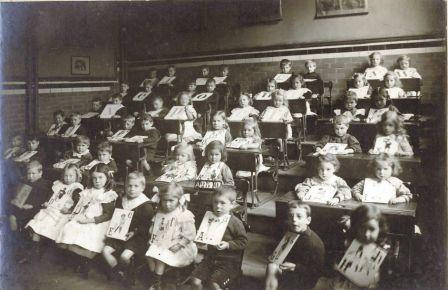 Strange how often it is ‘Education’ which provokes me that little bit extra – so that I not only formulate a response, but take the trouble [and the time out from my packed working day] to polish it a little and then post.
This time it is last week’s debate on the length of school days and school holidays.
If school is there to prepare us for something, to prepare us to be something. then maybe I care because that effectively poses the question “What are we for”. I think that’s the interview question that should be put to any aspiring education Minister. The answer forms, or should form, the basis of everything they then do in office.
My own answer is that we are, to borrow from Kant, “ends in ourselves”. I think that the ‘point’ of every human being is to identify, and then work towards, what it is to be a better me.
We have to live, we have to eat, make shelter and defend ourselves. We have to work together, sometimes in quite specialised ways, to realise not just those basic ends but also all manner of other wants and needs… some perhaps more real than others. To do this we have become dependent upon technology, its mastery and further development. We also have something called an economy, which makes the collaboration possible. But all those things are means, not ends.
[I’m prompted to an aside. I think the late Baroness Thatcher was to a degree mis-interpreted on the matter of “there is no such thing as society”. I think what she was saying is that there is no such thing as a Society which has existence over and above individual people and their actions… that there is not some extra entity or resource to blame or call upon when the collective actions of those individuals fail to deliver a better world, nation or neighbourhood. To the extent that this is true, and for exactly the same reasons, I would say that there is no such thing as “the Economy” over and above the productive and commercial actions of individuals. What matters in both cases, of course, is how those actions are accommodated and supported.]
So if the idea of longer school days and shorter holidays is to enhance “the economy” then it misses the point. The economy is *us* and it is for *us*… all of us. To use education to promote the economy, as an end in itself, irrespective of the impact on all the other dimensions of our personalities and physical well-being, is to see us all as a means to create wealth, and not as “ends in ourselves”. It smuggles in, unexamined, the premise that economic growth solves all ills… including any which it may itself inflict along the way.
Even if the premise is individual advancement… career, good job, accolades, professional success through more intensive education… it still misses the point if it does not balance these against the other good things in life… which include the balanced day or week, and periods of leisure and withdrawal and renewal. These are the same things that the long day/short holidays prescription for education is also in conflict with.
The test of an educational system lies in its ability to equip us to become better people, and to carry on becoming better people. If that seems abstract, I think there is probably far more productive potential locked up in personal demotivation, stress, distorted relationships, addiction and substance abuse, mental health, and general lack of direction, than could be offset by a decade of technologically driven growth. This is the reserve which could be tapped by helping us all, and helping us all help each other, to be better people. An educational system which simply ramps up the pressure, industrialises the process, and creates more such disfunctions along the way, would have to guarantee a hell of a lot of economic benefits before it looked like a competing solution.
A radical reform of education would be one which, in step with a radical review of economic policy, had the courage to surface, and debate, the question, “What are we (all) for?”. I also hope that our educational syllabus itself, still has some room for that question.
Aspiring Secretaries of State for Education, please feel free to post below your answers to that question…
Career Paralysis – excellent summary by Rob Archer
This is one of those occasions when it’s best just to point to what someone else has done. I could fill a post paraphrasing and explaining why this is so right, and so relevant to things that I think and do. But it wouldn’t add much, beyond justifying my endorsement. Thanks also to Johnnie Moore for highlighting this in the first place.
Below is Part 2, all about responses, strategies and resources. If you want to look at Part 1 which set up the analysis it’s here
So here’s Part 2 – just click on the right arrow to page through the slides.
…
…
I’m off to see what else I can find at Rob’s blog here.
Near Misses
Someone was shot and killed in Dartford last night. Enough details are starting to emerge to establish that this wasn’t a random encounter. Kent Police have been quick to publicise this, making people feel safer.
I heard about it on twitter, quite soon after the victim was found. I watched the ripples spread out and was reminded of the reaction to a stabbing in Bexleyheath a year or two ago. On that occasion the attacker was suffering from acute mental health problems, and the weapon was snatched from the knife display in a local shop.
That attack was random, but explained by an individual’s circumstances, and last night’s shooting was reportedly personal, but using a pre-procured weapon.
But in both cases there were similar reactions, via twitter, which revealed anxiety about the places where they happened. I see 3 types…
1. The Curse of Place
2. The World going Downhill
3. The Near Miss
The Curse of Place. This is where the place is almost held responsible for the event. e.g. What do you expect in Dartford? Or in a place like Dartford. The tweeter often expects widespread agreement… everybody knows this is a bad place. Maybe they do live there, and don’t like it, but often they don’t know it, or have had a limited negative experience. The Curse of Place reaction means it immediately becomes a place where “these things happen” – even if it turns out that they very rarely do.
The World going Downhill – looks beyond the place to “this country” or “the world today”. The event becomes evidence that things are getting worse everywhere. Sometimes it comes from a flip of the Curse of Place. For example, reactions to the Bexleyheath stabbing were divided at the time between those who saw it as typical and those who felt it was a change… i.e. for the latter, “if these things can even happen in Bexleyheath, then what is the world coming to?”. Maybe I should call it ‘The Curse of These Days’.
To be clear, I’m not mocking people who react this way. Tweets, are the immediate and felt reactions of people. I felt obliged to answer back – to say this wasn’t ‘typical Dartford’ based on my 20 years of experience – but it doesn’t mean I think people are stupid. Reactions to these events tap into deep instincts and emotions. There must be a climate of anxiety, about place and about the world in general, amongst the people who tweet this way. Even those who react by putting down Dartford/Bexleyheath may be trying to make themselves feel safer by the comparison with their own place. A lot of those manifesting the Curse of Place, and the World going Downhill, last night were young people, perhaps experiencing something like this so close to home for the first time. Some seemed genuinely and immediately scared and felt more at risk than before.
This brings me to The Near Miss. A lot of people were reacting and posting because “That’s near where I live”, “That’s where I used to live” , “I’m so glad I moved away”, or “I was there an hour before”. This all seems to be about some sense that , “It could have been me”. I think this is because something only becomes real, and actually touches us, when it is close enough to associate with our own immediate experience… like knowing the actual stretch of road, or having passed through the same space. I think this is true even once you reflect on the true odds of your having been at risk.
The Near Miss is significant for all sorts of things. We see stories of gun and knife crime that happen to ‘other people’, far enough away for it to be abstract or to be some impersonal soap drama – however compelling. We relate to the threat of gun and knife crime through numbers – the trends going up or down according to who works the stats. That’s how we merge it into our general sense of this country, or the world, getting better or worse. But when it’s a Near Miss, the event becomes real for us – and we react emotionally and with much stronger first person fear, sorrow or just shock. To quote one literary figure [anonymous under the circumstances], “Accidents only ever happen when you are having them.”
There’s a positive in this for me. It reminds me that people relate differently to things that feel ‘real’ and that very often ‘real’ means local. Local, is whatever makes something feel like a Near Miss even if it didn’t affect you directly.
That’s why politics which people find impossible to relate to – because they are acted out as distant dramas about trends and other people – become real and important only when they are about a Near Miss. That means they are ‘local’. If we want to kindle more popular engagement in politics, then we need to find more ways of making politics local, and more ways of finding the experiences that people care about because they feel like Near Misses. That’s not about playing on fear, it sometimes means dispelling the fear by being able to tell the real story.
BUT
I don’t want to fall into a trap that I chide others for – where an event becomes just a token to generalise, argue, or cry woe about. So, still the most important thing to remember is that somebody died last night. It means that somebody has probably lost a son, a brother, a Dad, or a best mate. Eventually we may learn exactly why and how. But every story is unique. It’s real for those who are in it, in ways that the rest of us cannot know – whether we are 2 miles or 2,000 miles away. Every story is unique because every person is unique. Every untimely death is a waste.
Home Pickled Democracy
 I’ve been pondering on Eric Pickles pronouncements last week, about Local Authorities who keep Council Tax rises below 2% in order to avoid a referendum. This story provoked a lot of journalistic commentary, and online comments, along standard lines. But I now realise what it was that saddened me in particular.
It’s because imposing a referendum on a Local Authority, on a single specific issue, actually results in less local democracy.
It undermines the goal of greater direct participation in local governance and services. I invested some of my finite stock of hope in the Coalition’s talk of greater devolution within, as well as to, the nations of the UK. I bet some of my remaining chips on David Cameron’s personal endorsement of the Big Society. I interpreted the latter as being about substituting local action for some component of your duty only to contribute through local taxation, and as an alternative to local service consumerism. The connection I make between the two is that if local people contribute more, they earn a stronger local mandate, away from the centre… and that this is a virtuous circle.
The rules are set thus – Local Authorities who want to raise Council Tax by 2% or more have to get a yes vote from a local referendum. Eric Pickles has turned up the heat by saying that those who make a 1.99% increase to comply with the cap are dodgers, disrespecting their public. That’s politics, of course, in both directions. 1.99% maybe smacks of clumsy presentation, or real desperation? But I also wonder whether Eric Pickles would be placated by 1.95%, 1.9% or even 1.8%… where do you not draw the line?
But the whole exercise seems warped.
It ignores the role of Central Government as a source of local funding. Here’s a simple hypothetical case – if a Council gets 3/4 of its cash from Central Government and 1/4 from Council Tax and local revenues, a 2% cut in central funding would mean it had to find 6% more itself, just to stand still. If their other rents and fees didn’t rise – that’s an increase of at least 6% in the Council Tax. In the same scenario a 2% increase in Council Tax would probably mean a 1% cut in overall expenditure, and so on.
If you want local people to have a say specifically on the local budget, why not give them a referendum on the level of Central Government support for their area as well? Because just as they might vote to be taxed less locally, they might vote to be given more by Whitehall? More legitimately, it’s because the ‘Government of the Day’ has already been voted for on the basis of a manifesto(s) and a complex set of inter-linked policies rather than just the resultant budget. Its reasons and constraints have been accepted… to some degree… by enough people.
Which is exactly the position that a local Council is in!!
By choosing to single out taxation, Central Government is loading the dice against elected bodies who have decided to raise more revenue and to be held accountable for the overall consequences at the next local election.
Instead, by giving local voters a seeming no-brainer to vote on, this arrangement further alienates people from the Council. It’s your chance to stop ‘them’ taking more from you… rather than getting involved in how ‘we’ resolve local needs and priorities. This weakens the existing processes for voting, lobbying, engaging… it somehow takes the failure of local democracy as a given and discards the whole thing. What does that do for devolution?
Of course local leaders could campaign for, and explain, their tax rise in the run up to a referendum. But that’s what should be happening anyway, and about a range of options rather than the blunt instrument of ‘yes/no’. If Eric Pickles thinks this isn’t happening then he should be looking for ways to stimulate more engagement in local democracy – to the point where he can respect the local budget mandate and take his hands off. That’s how you devolve.
Similarly, by framing a referendum solely about the rate of local tax you reinforce the idea that local government is just about paying a fee for services. So if you can vote down a ‘price rise’ that’s it, you can walk away with no further need to get involved in choices, decisions or community. Again, how does that cultivate the sort of connections, and identification with your neighbourhood as a whole, that would fuel the Big Society?
If you have to use such a crude instrument to satisfy yourself that local people are having the impact on local decisions that they deserve, then you are admitting that the first 2.5 years of trying to foster greater local involvement and responsibility have failed.
That’s not a party political point – it’s a point I would make about every super-imposition of special decisions, and of locally unaccountable service providers [which instead ‘compete’], by any government.
One last thought – it costs money to run a referendum – a significant amount relative to the budget of a small Authority. How does that help them to deal with a budgetary shortfall? Unless Eric Pickles miraculously finds money for this exercise… which he couldn’t find for other purposes.
Branding Horses
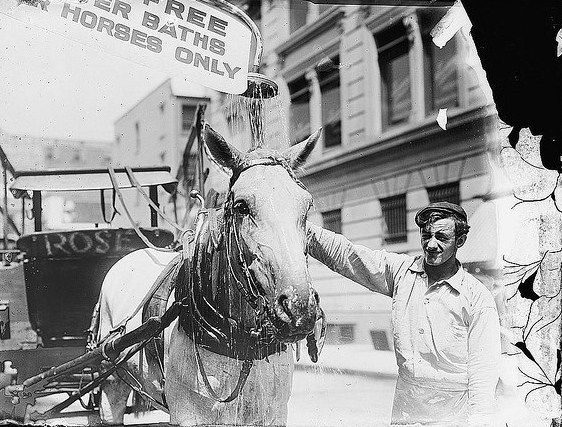 So this week we had the story about horse meat being found in ‘beef burgers’ produced for a number of supermarkets in the UK and Ireland. Cue for everybody to go “eugh!” followed by a debate about whether there’s anything wrong with eating horses (and why) or about whether horse meat was good for you.
All of which is to miss the point. What really matters about the horse in those burgers is that it wasn’t beef! Or perhaps more precisely, it wasn’t on the label. The story is about the ability of retailers – especially large powerful retailers – to underwrite the content of the products they sell. That strikes me as a pretty key attribute of a retail brand that sells food.
The stories should also distinguish between two scenarios; one where “some horse DNA” was found in a burger and one where “horse” was found to constitute 20% of a ‘beef burger’.
In the first case we may only be talking about traces – picked up in a processing plant, or maybe included via components like gelatine. This is the story that reminds us how difficult it is to track every element of a global supply chain, including ingredients which are themselves already processed, when you are making products on a large scale. This is a generic issue, and one where you expect manufacturers to take reasonable steps whilst recognising the practical limits. This is the world of “May contain traces of nut”, with some sharing of risk with the consumer. Perhaps we now have to add, “May contain traces of horse” or “May contain traces of just about anything for all we know – including things which offend your ethics, your religion, or your immune system”.
In the second case you are talking about something which constitutes a significant ingredient. Enough meat to make up 20% of the mass of a batch of burgers is not something you overlook. Somebody, somewhere, must knowingly introduce horse into the process, or successfully pass off horse meat as beef.In this case the story is really about the role of the retail brand in policing its suppliers – ensuring that it knows, and sometimes that they know, what is going into the product that they sell.
Assuming, and there’s neither evidence nor a sane motive to suggest otherwise, that the supermarkets didn’t know there was horse in the beef burgers they put on their shelves, the onus is now on them to earn more trust by having systems and relationships in place to make the processing and supply chain transparent. This week’s story has perhaps shown that they need to up their game in this respect – replacing B2B supplier trust with more frequent and direct forms of audit, and probably incurring more cost along the way. It may even make us sympathise a little with supermarkets when suppliers complain that they are intrusive and dictatorial!
Finally, there’s a paradox here. As I understand it, the burgers in question were predominantly supermarket own brand products. If they were burgers from big household names, there would be a sharing of embarrassment between them and the retailers. You would forgive the supermarket more for relying on the ability of reputational risk to keep a famous food brand on its toes. It would be “shame on them”, as much as shame on the supermarket. But the products you hold a retailer most responsible for are surely those on which they choose to stamp their own label – their promise to you. Yet aren’t these are often the cheaper, ‘value’, white label products which make fewer implicit promises and are likely to contain lower percentages of prime product [beef!], less premium cuts of that product, higher proportions of filler, and more flavourings and texturing to counteract that? Those seem to be the products at most risk from ambiguity – be that ‘traces of’, or 20%!
Will you now be expecting the big name supermarkets to tell you more, in general and on specific product labelling, about how they ensure that food carrying their brand contains only what it says on the label? Will you be a little more likely to turn to food producers who can tell a great story about what, and only what, is in their products, where it came from and how certain they are about that?
Or was it really just about horses after all? A bit of Anglo Saxon squeamish sentimentality about what we eat, already fading away? After that does it go back to being all about price, in straitened times, and a case of “what I don’t know won’t hurt me … mostly” ?


 Nick Buckley : Practically Mindful