Building (in) our community
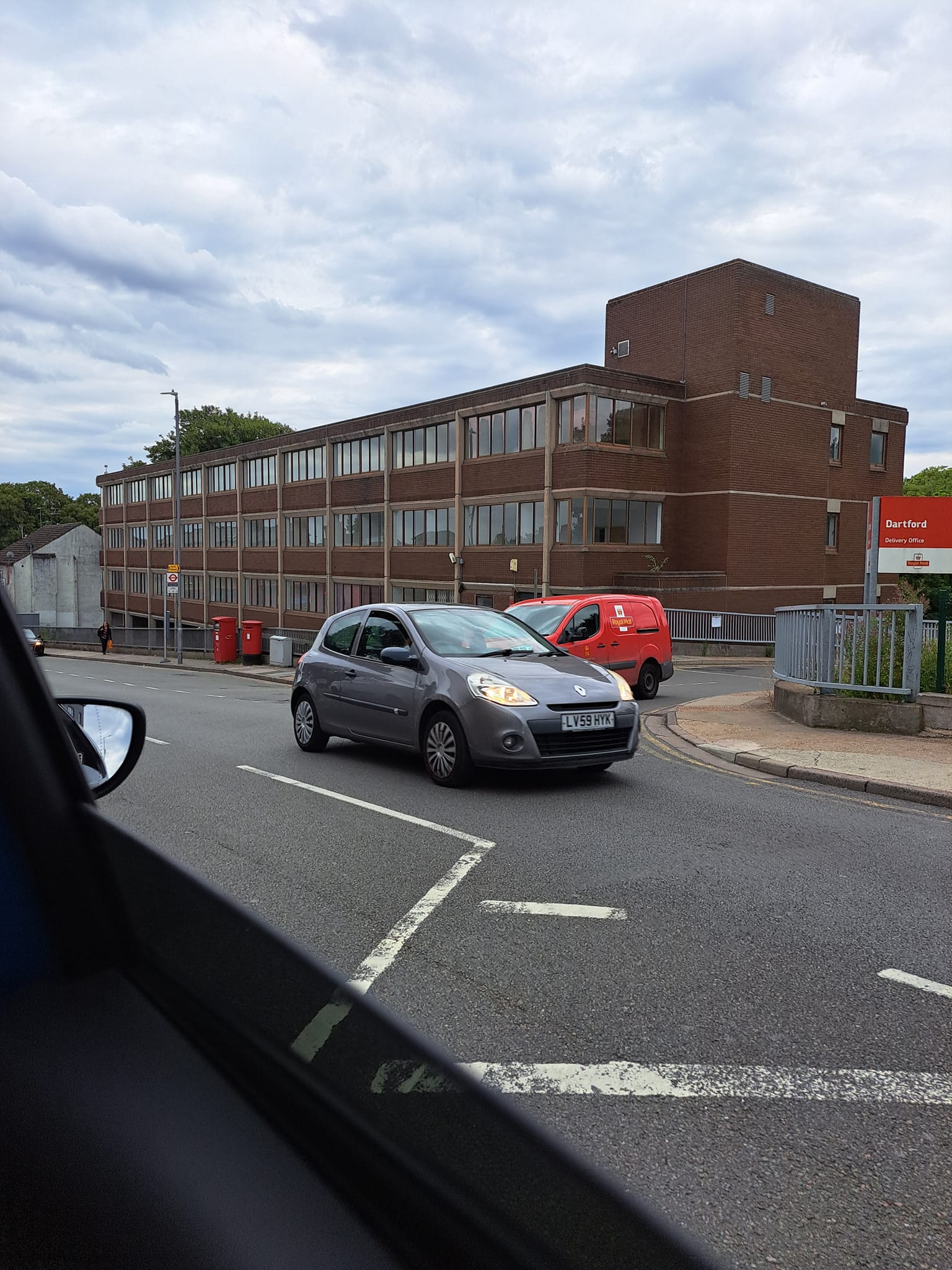
I do a lot of walking. Mainly for fitness and general health, often as an alternative form of meditation, and generally just to appreciate my environment. Much of the time I walk in the green spaces around my home town of Dartford (Kent), but sometimes I walk through the town itself, particularly if I have shopping to do, or I have an urgent appointment with the Growler Stop craft ale bar. Doing this regularly over the years I see cycles of seasonal change, but also longer-term trends. One of the things that nags away at me, and even depresses me a little at times, is the number of empty buildings. Not the classic ’empty shops’ issue, but other types of building, often formerly used for public services of some kind, and gradually deteriorating, gathering litter and weeds, and dragging down the look and feel of the town.
As I say, a nagging feeling… until today when I spotted a thread on the Dartford Living Community Facebook group. It asked who owned a particular empty office building on West Hill – and started with an image (see above) added by the original poster. The thread went on into a debate about how the building could be put to good use, and thence about immigration and priorities for support for different social groups. I knew it was previously a Kent County Council [KCC] office, and that it was briefly notorious after having been hijacked as a large cannabis farm! So I started to add a comment – about this, and about my nagging depression about once public buildings now adding to negative aspects of Dartford. My underlying thought was, “Surely this is, or was, our building! And yet we’re left with no influence or control over it now. What happened?
The comment grew and grew, out of many years worth of walking and brooding. Too big for a Facebook comment. So here, now with that context, it is:
” I’m interested in buildings like this. By ‘like this’ I mean things that were once publicly owned and were then disposed of in a way which has resulted in them standing empty, detracting from the appearance and life of the town, blocking positive activity, and creating the risk of crime, graffiti, criminal damage, fire etc, etc.
So, ‘like this’ would also refer to the main Post Office building in Hythe Street too. There may be others and perhaps other people who also know Dartford well, might suggest them.
These are buidlings that were once owned by a public body. This one in pictured in West Hill used to be owned by KCC. That means it was owned by us. When it was built it was funded by Council Tax payers’ money, or from central government funds which were designated for local government in Kent. So it was built by us, to serve our community. It was maintained by KCC. So it was maintained by us… and if it had become an eyesore or a risk at the time, we could have complained to our relevant Councillors about the state of our building, and expected a response.
At some point in local government cutbacks, I guess KCC decided they didn’t need it any more. They sold it off and, yes, the money they got for it probably went into the KCC coffers to, temporarily, ease the day to day budget. But when they sold off our asset, it looks like they didn’t put any conditions on the future development or use. For example, some kind of ‘use it or lose it’ clause. It is perfectly possible to put such covenants on land, or a property, as part of the contract of sale. But, given that it has lain dormant, collecting litter, weeds (and, yes, “weed”), suggests that it was just let go. Out of sight, out of mind. One can almost imagine KCC, headquartered in Maidstone, just dusting off their hands and turning their backs. We don’t have to look as far as Brussels for decisions being made, at a distance from our town, over which we have no say, but for which our town bears the consequences.
I’m sure a similar story could be told about the divestment of Royal Mail (Royal Mail Holdings, Post Office Ltd etc), the ‘arms-lengthing’ of that business, and then the inability of local bodies and representatives to prevent closure and sale of buildings, like the main Post Office in Hythe Street. This building is now contributing its own dilapidation and graffiti to the appearance of one of our town centre streets.
As I say, people may know of more such places in the Borough.
It’s one thing to argue about whether these buildings were surplus to requirements or capacity. But it’s another just to accept that the bodies disposing of them had no duty to our community, in determining their future state or use. It seems that organisations, some of which we can’t call to account, can just pocket the cash and walk away. In that respect, KCC, and Royal Mail Holdings (or whoever was ultimately determining the ownership and status of the Post Office) are no better than Tesco, who sat on the Lowfield Street land for so many years and turned the whole thing into an unproductive eyesore for a generation.
The cummulative effect of all these acts of neglect has a real impact on ‘What it’s like to live in Dartford’, or on whether people want to visit, shop, eat out, or open businesses to serve them.
Drew Swinerd [Note: a local Councillor in whose Ward the building sits, and who had helped out by doing some digging] helpfully answered some of the questions – i.e. that the West Hill building is currently owned by Central Park Capital Ltd and that it cost them £750,000. There’s maybe also the implication that, if anyone wants to put this to good use, they’re going to have to find £750,000 to buy it, and then they’ve inherited all the repair and running costs, taxes and utilities… before they can even think about how to fund whatever beneficial activity they have in mind. All good points.
Initially though, I’m interested in lower stakes than that. People often feel helpless today because authorities or businesses can make decisions which have an impact right on their doorstep, and they seemingly can’t do anything about it.
Either that’s not true, and there are powers that can be used, or at least should have been used when there was an opportunity. Or, maybe we should be looking for changes which give people more of a say in what happens to their neighbourhood. More than just voting for an MP, or a [District or County] Councillor.
For now – and I’m sticking just to this building and others with a public service history – I have some questions. I don’t know who can answer them, but maybe Drew, as a sitting Councillor can gives us a head start:
- What went wrong? What could KCC have done when this building was disposed of, to get a better future outcome for people living close to this building, and more generally for Dartford? e.g. by putting conditions on the sale of this public asset.
- If this could have been done but wasn’t? Why not? Who – collectively or individually – was responsible? Who, thereafter, were the original purchasers and what has the subsequent chain of ownership been.
- If nothing could have been done at the time, we have to shift to the present. Is there information, easily accessible, about the current owners’ plans for the building and property? In the absence of specific provisions in the contract of sale (to the original purchaser), what duties does the current owner have, anyway, to maintain the property, and the grounds, in a safe and secure state, and to mitigate the visual impact on the area? If there are such duties, who’s job is it to monitor and enforce them? If they are too busy… would they appreciate some help from people in the community to do this?
- Irrespective of whatever plans they have, are there general duties to do something with a property or land… or can someone simply sit on it, with impunity, indefinitly, no matter what state it is in… so long as bits of it don’t actually start to fall on people?
- At the end of that chain of thought. If there aren’t such duties, and there isn’t such transparency, does anyone agree that, as a strategy for the future of Dartford, such powers should be created? This isn’t without precedent – when special zones are created, such as to enable the creation of new communities like Ebbsfleet Valley, the development bodies are given the powers necessary to make the future vision happen.
Without the above – and, as I said, I’d multiply it by the number of similar buildings in the Borough – we all spend our lives in Dartford walking past disused buildings, ugly and wasted, with about as much ability to do anything about it as if they had been dropped from outer space. I hear, all the time, that people are frustrated bya similar feeling of helplessness about so many things. Is this a chance to start feeling, again, that the town is ours? And that the various Councils and public bodies are actually us, or at least our agents, in this respect, and not just more corporations?


 Nick Buckley : Practically Mindful
Thanks Nick. Very useful exploration of the transfer of tax payer’s assets to private hands, corporate welfare at its fulest.